Emergency Roof Repair in Riverside, CA
Emergency roof repair in Riverside, CA starts with a roofer covering the opening in your roof, so the water stops before anything else happens.
Our roofing team keeps the line open 24 hours a day, 7 days a week; emergency calls answered around the clock.
Call (951) 433-4486 and tell us where the water is showing and what happened to the roof. Our roofing team tarps wind and storm damage, then gives you a written estimate before any work starts, and you decide whether to go ahead.
Who does emergency roof repair in Riverside, CA?
We do: our roofing team answers emergency roof calls around the clock, for houses across Riverside.
When you call, we ask three things: where the water shows inside, what your roof is made of (shingle, concrete tile, clay tile, metal or a flat section), and what happened.
Our emergency service covers houses in the 27 Riverside neighborhoods on our areas page. If the storm has passed and nothing is coming in, a booked roof inspection records the damage with dated photos instead.
Emergency roof repair services and what each visit covers
An emergency visit stops the water now, records the damage and ends with a written estimate for the permanent repair.
Our emergency roof repair services, on every call:
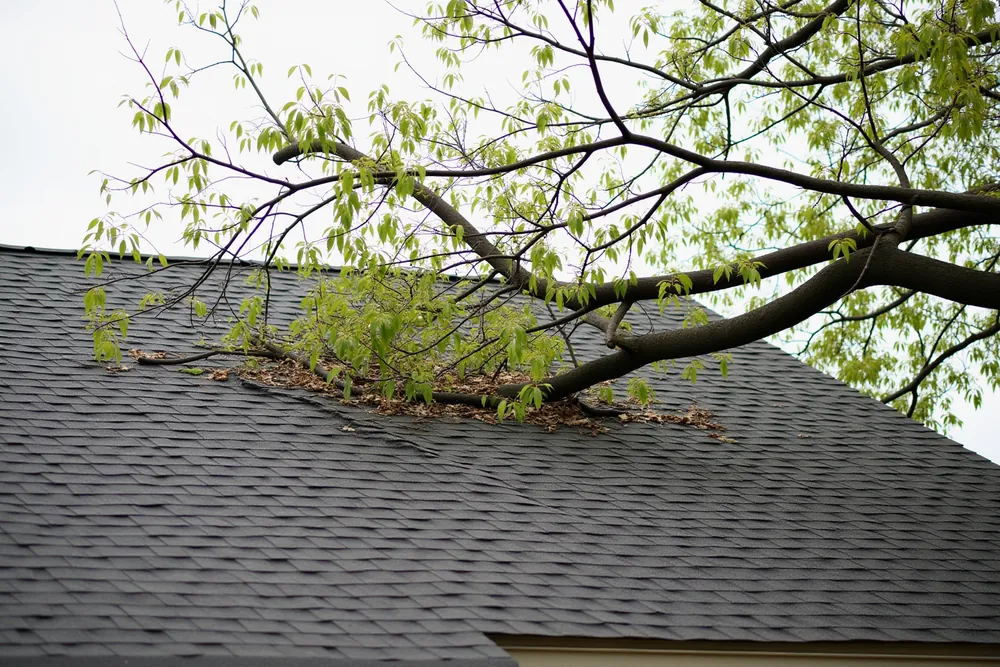
- Find where the roof is open. Torn-off shingles, slipped or cracked concrete tiles, loose ridge caps, flashing peeled away from a wall, or a branch through the plywood sheathing.
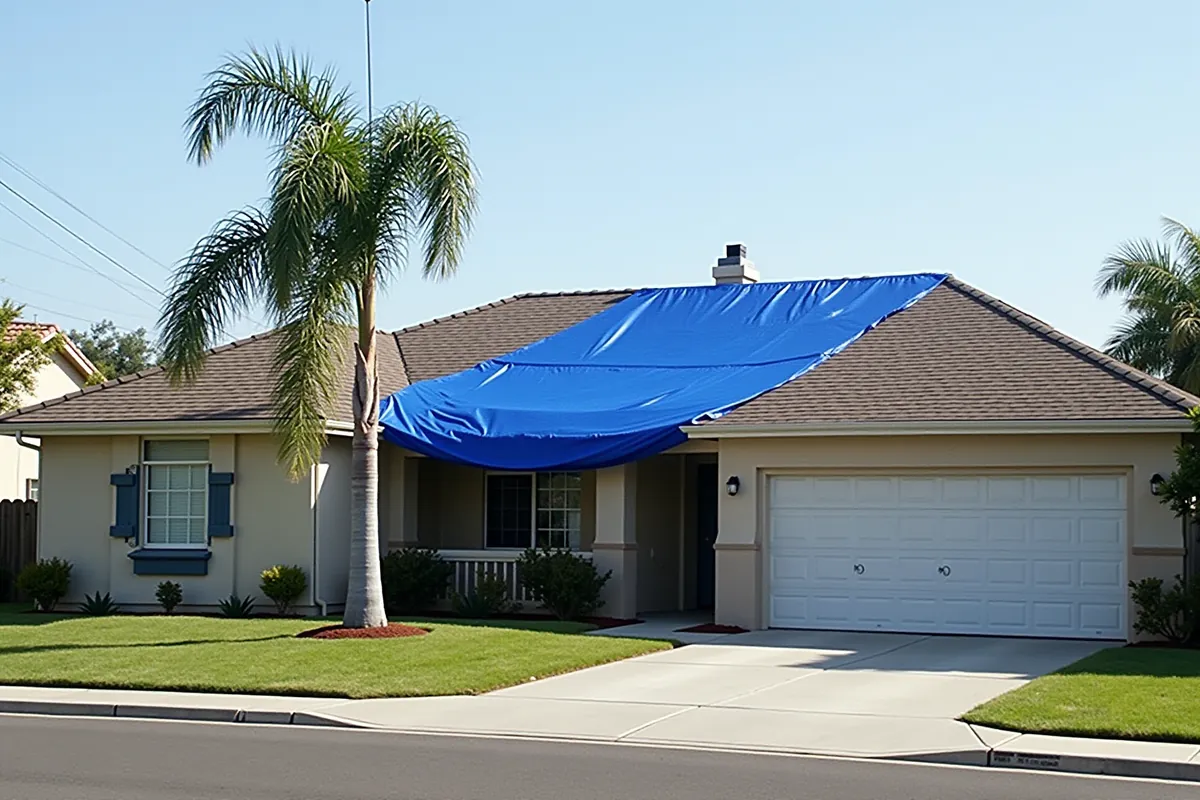
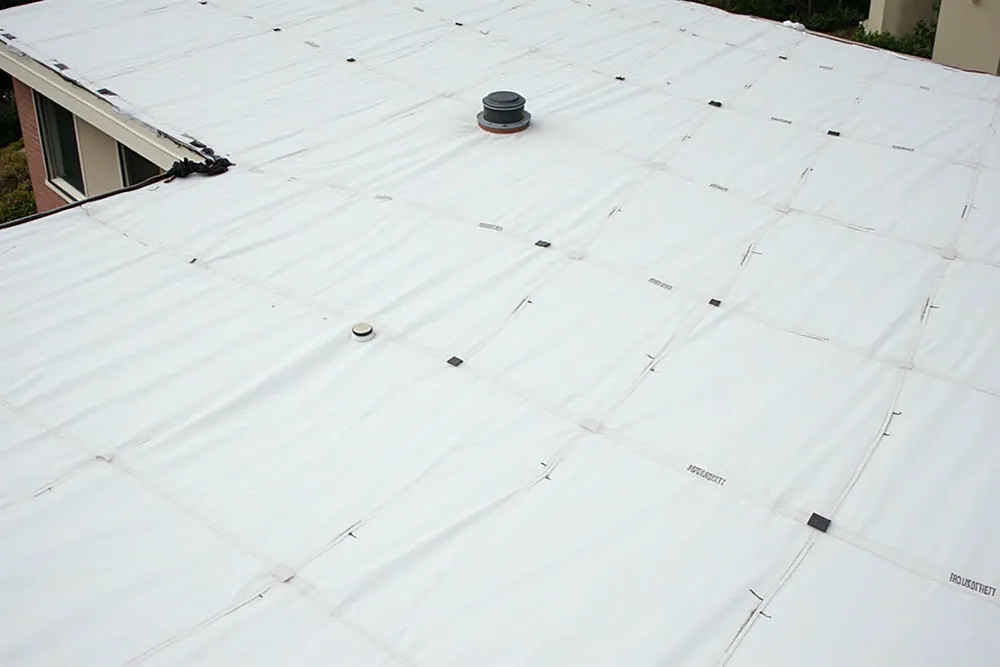
- Cover it. An emergency roof tarp over the damaged section, fastened to wood battens so the next gust cannot get under it.
- Seal what a tarp cannot reach. A temporary seal where a tarp is the wrong tool, such as a small opening at a vent pipe boot or an attic vent.
- Check the attic where the roofer can reach it, for wet insulation and soft deck.
- Record it. Dated photos and measurements of each damaged area, before and after the tarp, and the cause as found.
- Price the permanent repair in a written estimate.
The visit stops at protecting your house. A wind repair with no water coming in is a booked roof repair, and tracing a slow leak to where it enters is roof leak repair. When the storm found a roof that was already failing, the job becomes a roof replacement in Riverside, and the tarp holds until it starts.
Is your roof leak an emergency?
Yes, when water is coming through the ceiling now, a ceiling sags, or wind has left the roof open with rain on the way.
How urgent your roof leak is, sign by sign:
- Water dripping or running inside: an emergency. Every hour adds wet insulation and drywall.
- A ceiling stain that is growing or bulging: an emergency. Water is pooling above it.
- Shingles or tiles missing, with bare underlayment or wood showing, and rain due: an emergency. Cover it before the rain arrives.
- A branch through the roof deck: an emergency, wet or dry.
- A dry stain that has not grown, or a drip that shows only in the heaviest rain, nowhere near wiring: a minor roof leak. It still needs a roofer, and it can wait for a booked leak repair.
Will a roof leak if shingles blew off? Not always at once. The underlayment, the felt or synthetic sheet under the shingles, sheds some water, but it is the roof’s second layer and was never meant to face the weather. Wind-driven rain finds the nail holes and torn seams. Missing shingles before a rain call for a tarp; missing shingles in a dry week are a quick booked repair.
When you are not sure, call and describe what you see. We tell you whether it reads as an emergency or can wait for a booked repair, and you choose.
Containing a roof leak until the roofer arrives
Move what you can, catch the drips, keep clear of wet ceilings and wiring, photograph the damage and call a roofer to cover the roof.
Inside, while you wait:
- Move furniture, rugs and electronics out from under the drip.
- Catch the water in buckets or bins, and lay towels to keep it off the floor.
- Keep out from under a ceiling that bulges with water, and keep children and pets out of the room.
- Keep clear of water near light fixtures, outlets and the electrical panel.
- Photograph everything before you move it: the ceiling, the water, the damaged belongings, the roof from the ground.
- Keep receipts for buckets, tarps or anything else you buy to protect the house.
Leave the roof itself to the roofer, who brings the ladders, harnesses and tarps. A wet roof is slick, and a sagging deck is not something to stand on.
Once the roof is covered, the drying can start, and the clock matters: the US Environmental Protection Agency advises drying water-damaged areas and belongings within 24 to 48 hours to prevent mold (EPA, a brief guide to mold and moisture).
Emergency roof tarping and temporary roof protection
A roofer lays a heavy, reinforced tarp over the open part of your roof and fastens it to wood battens, so rain runs over it.
How we tarp a damaged roof:
- Find every opening, from the attic as well as the roof. The hole you can see is not always the only place the roof is open.
- Clear the area of loose shingles, broken tile, branches and debris, so nothing tears the tarp from underneath.
- Lay the tarp with a wide overlap on every side of the damage, carried up toward the ridge where the roof allows, so water sheds over the top edge instead of running under it.
- Fasten the edges to battens, strips of lumber fixed down through the tarp, so the wind has no loose edge to lift.
- Check the attic again and photograph the roof, uncovered and covered.
Tile and flat roofs get emergency tarps too, set differently. On a concrete tile or clay tile roof, the tarp and battens sit where their weight will not crack more tile, and a hip or valley gets its own overlap. On a low-slope roof, the cover has to keep the drainage working, so water still reaches the drains and does not pond against a wall. The permanent fixes have their own pages: tile roof repair and flat roof repair.
Can tarps be used as temporary roofing? Yes, as temporary protection only. A tarp keeps the rain out until the permanent repair; it is not part of the finished roof.
Emergency roof tarp lifespan and the permanent repair
A roof tarp lasts weeks, not years: the reinforced sheeting FEMA uses on damaged roofs is designed to last 30 days.
The Federal Emergency Management Agency (FEMA) recommends arranging permanent roof repairs within 30 days of its sheeting going on. A tarp on your roof wears out the same way. Sun and wind are hard on it: weathering turns the plastic brittle, the grommets tear, and an edge that works loose lets water in under the cover. A tarp that has sat through a Riverside summer is not the tarp that went on.
Our permanent repair after a tarp follows within a few days, depending on the work: once the roof is dry and the materials are in.
Storm damage roof repair in Riverside
Storms here damage roofs with wind and rain: they lift or tear off shingles and tiles, peel back flashing and loosen ridge caps.
Branches land on the roof, and rain gets in wherever the covering opened. Hail is rare here: the National Oceanic and Atmospheric Administration’s (NOAA) Storm Events records show 7 Riverside County hail events in 2016 to 2025, none in the City of Riverside.
The National Weather Service defines a Santa Ana wind as “a weather condition in which strong, hot, dust-bearing winds descend to the Pacific Coast around Los Angeles from inland desert regions” (National Weather Service glossary). After Santa Ana wind events, the damage is often a shingle tab or a tile edge that the wind worked until the fasteners let go. The roof can look intact from the street and still have a row of broken seal strips.
The rain decides when that damage becomes an emergency. At the Riverside Municipal Airport station, 6.21 of the year’s 9.37 inches of rain fall in December through February and 0.15 inches in June through August (NOAA NCEI 1991-2020 seasonal normals, USW00003171).
Storm blew shingles off: what should you do? Photograph the roof from the ground and the pieces in the yard, keep the pieces, and call us to tarp the roof before the next rain.
Licensed roofers for emergency roof repair in California
A roofer licensed by California’s Contractors State License Board (CSLB) does it. Roofing work of $1,000 or more, or any job that needs a building permit, must be done by a CSLB-licensed contractor.
The rule is in Business and Professions Code section 7048, and the CSLB explains the change in its Industry Bulletin 24-07.
Roofing in California takes a C-39 license. When you are choosing among roofing contractors, check each one’s number on the CSLB Check a License page: it takes a minute on your phone, even when a storm has you under pressure to say yes to whoever knocks first. A C-39 roofing contractor has to carry workers’ compensation insurance or a valid certification of self-insurance, whether or not they have employees (CSLB, workers’ compensation).
Emergency roof repair permits in Riverside
A re-roof needs a City of Riverside permit, which can be issued the same day; the tarp, a temporary cover, goes on first.
For a smaller repair, we ask City of Riverside Building and Safety before we start rather than guess. The City of Riverside’s permits page lists reroofs among the permits that can be issued the same day, over the counter.
A storm repair that turns into a full re-roof, such as a roof where the storm found an old, failing covering, follows the re-roof rules on our roof replacement page.
Emergency roof repair contracts and your right to cancel
A home improvement job over $500 needs a written contract, and that includes an emergency roof repair.
Read it before you sign, even with water coming in. The other rules for your emergency roof repair contract, from California Business and Professions Code section 7159:
- In California, the down payment on a home improvement contract can’t be more than $1,000 or 10 percent of the contract price, whichever is less.
- After a declared emergency, a contract to repair the damage can be canceled within seven business days. That applies to a contract to repair or restore your home after an event for which the President, the Governor or a local government has declared an emergency (B&P 7159(e)(7)).
The CSLB explains what a home improvement contract must include.
Emergency roof repair cost in Riverside, CA
Around Riverside, an emergency roof tarp runs $250 to $600.
Four things move what the service call and the permanent repair cost:
- Urgency and after hours. A call at night, on a weekend or in the rain. An after-hours call can carry an extra charge, told before a crew comes out.
- Roof size. A bigger opened area takes a bigger tarp, more battens and more time on the roof.
- Pitch and complexity. A steep roof needs roof jacks and harnesses. A hip, a valley, a dormer or a second story means more cuts, more overlap and more fastening.
- Access. A single-story roof over a driveway is quicker and safer to reach than a two-story roof over a pool, a glass patio cover or a steep yard.
Is the emergency quote in your hand fair? Read what it covers. One quote may be the tarp only, another the tarp and the permanent repair, a third may include replacing soft deck found once the roofing is off. Ask each roofer what they found as the cause, what they will replace, and how they price deck damage found later. The quotes that answer those are the ones you can compare.
Insurance coverage for emergency roof repair
Usually for wind and sudden water damage; wear and tear and long-term leaks are usually excluded, so check your own policy.
The California Department of Insurance (CDI) residential property insurance guide lists windstorm among the perils a policy covers, and sudden and accidental water damage as covered. It lists wear and tear and maintenance among the perils generally not covered, and excludes water damage from seepage or leaks. The CDI’s consumer alert on coverage after storms says water damage from wind-driven rain during a storm and damage from fallen trees are typically covered, while flood and mudslide are excluded.
What that means for the questions you are asking:
- Will insurance cover shingles blown off? Windstorm is on the CDI guide’s list of covered perils, subject to your policy and your deductible.
- Will insurance pay for wind damage that let the rain in? Wind-driven rain during a storm is typically covered.
- Will insurance fix a roof leak? A sudden leak caused by storm damage is a different claim from a slow leak that has stained the ceiling for a year. The cause and the timing matter, and the insurance documentation from a roofer’s visit (the dated photos and notes) records both as found.
The same storm alert says to make temporary repairs to prevent further damage, and not to make permanent repairs until the adjuster sees the damage. That is the order an emergency visit follows: the tarp first, the permanent repair after.
Your policy’s own wording decides what a claim pays, and your agent or insurer can read it with you.
Should you file a roof insurance claim?
Only when sudden damage your policy covers will cost more to repair than your deductible.
The written estimate from the emergency visit gives you the repair figure to set beside your deductible. The decision is yours, and the roof gets repaired either way.
Your policy expects you to stop further damage, so keep photos and receipts. California’s standard fire policy form, in Insurance Code section 2071, says the insured must “protect the property from further damage”. Separately, the CDI’s Residential Property Claims Guide says: “Your insurance company will reimburse you for all reasonable costs to protect your property, as long as you save receipts for any materials you buy.”
Once you report a claim, California’s claim regulations set the insurer’s deadlines. The insurer must acknowledge your notice of claim within 15 calendar days (10 CCR 2695.5(e)), and must accept or deny the claim, in whole or in part, within 40 calendar days (10 CCR 2695.7(b)).
How do you talk to an insurance adjuster about roof damage? Stick to what happened and when, and hand over the record: the dated photos, the measurements and the cause as found. Be there for the adjuster’s visit, and ask them to walk you through any line in their scope that differs from the roofer’s estimate.
Insurance says you need a roof replacement? Then the insurer’s scope covers a full re-roof, and that job, its permit and its materials are on our roof replacement page. What you pay on an insured re-roof depends on your deductible and on what the scope includes. Ask for a quote written to the same scope, so you can see any gap before work starts.
Who negotiates your roof insurance claim?
You and your insurer settle your roof insurance claim; negotiating it for pay on your behalf takes a licensed public adjuster.
Insurance Code section 15007 defines a public insurance adjuster as a person who, for compensation, acts for or aids you in negotiating or settling a claim for loss or damage to your property. Section 15006 says no one may act as one unless licensed. The CDI’s storm alert adds: “Try to settle your claim directly with your insurance company before hiring a public adjuster or an attorney.”
So the roofer on an insurance job does roofing work: records the damage, prices the repair, and repairs the roof to the scope you agree to. You talk to your insurer. When the insurer’s scope misses something the roofer found, the photos show where, and you raise it.
Do you have to use the roofer your insurer names? The contract for the work is yours to sign, with the roofer you choose. For wildfire claims, the California Department of Insurance tells claimants they have “the right to rebuild using the contractor of your choosing” (CDI, top tips for wildfire claimants). For a wind or water claim, ask your insurer what your policy says, and read any contract before you sign it.
Emergency roof repair that keeps your house dry
Covering the roof quickly keeps the repair to the roof itself: the deck, the insulation and the ceiling stay dry.
What a quick cover keeps dry:
- The roof deck. Plywood or oriented strand board (OSB) sheathing that stays dry stays firm, so the repair is new shingles, not new sheathing.
- The insulation. Dry attic insulation keeps insulating and keeps water off the ceiling below.
- The ceiling drywall. Kept dry, it does not stain or sag.
- Nails and flashing. Kept dry, they do not rust, and the roofing around the opening stays fastened.
- Drywall, insulation and wood, free of mold. Materials dried in time do not grow mold, which would be a separate clean-up.
Emergency roof repair across Riverside neighborhoods
Each Riverside neighborhood has an emergency roof repair page of its own.
Each page covers what the houses there have and what tends to fail on them: emergency roof repair in Airport, emergency roof repair in Alessandro Heights, emergency roof repair in Arlanza, emergency roof repair in Arlington, emergency roof repair in Arlington Heights, emergency roof repair in Arlington South, emergency roof repair in Canyon Crest, emergency roof repair in Casa Blanca, emergency roof repair in Downtown, emergency roof repair in Eastside, emergency roof repair in Grand, emergency roof repair in Hawarden Hills, emergency roof repair in La Sierra, emergency roof repair in La Sierra Acres, emergency roof repair in La Sierra Hills, emergency roof repair in La Sierra South, emergency roof repair in Magnolia Center, emergency roof repair in Mission Grove, emergency roof repair in Northside, emergency roof repair in Orangecrest, emergency roof repair in Presidential Park, emergency roof repair in Ramona, emergency roof repair in Sycamore Canyon Park, emergency roof repair in Sycamore Canyon/Canyon Springs, emergency roof repair in University, emergency roof repair in Victoria and emergency roof repair in Wood Streets.
Emergency roof repair questions
Can a roof be repaired while it’s raining?
Not the permanent repair: a roofer can tarp in the rain when the roof is safe, and the repair waits for a dry roof.
When lightning or strong wind makes the roof unsafe, nobody goes up until it passes.
Is it okay to put new shingles on a wet roof?
No. New shingles, underlayment and flashing go down on a dry deck. Roofing laid over wet wood traps the water under it, and the deck rots from the inside. That is why the tarp holds the roof until the deck has dried out.
What should I do if my roof leaks during heavy rain?
Catch the water, keep clear of wiring, take photos and call a roofer to tarp the roof. Note the time the leak started and where it shows. That helps the roofer find the opening, and it helps your claim if you make one.
How long can a roof leak before damage?
Not long: the first water through the roof is already soaking the insulation and the drywall. A leak that runs for days reaches the deck and the framing, and wet materials left that long grow mold. Cover it now and the repair stays small.
Can I put a tarp on my roof to stop leaks?
Yes, a tarp stops leaks, and a roofer is the one to put it up there. A tarp that is laid too short or fastened only at the edges lifts in the first gust and channels water under itself. We tarp roofs; call us and we cover it.
What is the best thing to cover a leaking roof?
A heavy, reinforced tarp fastened to wood battens, carried past the damage toward the ridge. Plastic sheeting tears, and tape or roof cement holds only on a small dry opening. The tarp is temporary either way: the permanent repair replaces what failed.
What is the typical cost of a roof tarp?
Around Riverside, an emergency roof tarp runs $250 to $600.
How long can I leave a tarp on my roof?
Only until the permanent repair, which follows within a few days, depending on the work. A tarp left on for months weathers, lifts and starts letting water in again.
Can you repair just a section of a roof?
Yes. A storm usually opens one slope or one area, and the permanent repair replaces that section. We match the shingle or tile as closely as the roof allows. When the rest of the covering is failing too, the estimate says so, and the choice is yours.
Can a roof be repaired in a day?
Yes: a repair takes a day or less, depending on the work. The permanent repair after a tarp follows within a few days, depending on the work, once the roof is dry and the materials are in.
Call for emergency roof repair in Riverside, CA
Call (951) 433-4486 at any hour: 24 hours a day, 7 days a week; emergency calls answered around the clock.
Tell us where the water is showing and what happened to the roof, and our roofing team arranges the tarp. You decide on the permanent work after you have read the written estimate.
Have these ready when you call us:
- your address and the best way into the yard
- where the water is showing inside, and since when
- what your roof is, if you know: shingle, tile, metal or flat
- photos, if you took any
- your insurer’s name and claim number, if you have filed
For the rest of what we do, see our roofing services in Riverside.