Tile Roof Repair in Riverside, CA: Broken Roof Tiles Replaced
Tile roof repair in Riverside, CA: we replace broken, cracked and slipped roof tiles and fix the underlayment under them.
Riverside’s rain comes mostly in winter and its summers are dry: at the Riverside Municipal Airport station, 6.21 of the year’s 9.37 inches of rain fall in December through February (NOAA NCEI 1991-2020 seasonal normals). A broken tile leaves the underlayment it covered open to that rain, so get it replaced before the rain season. Call our roofing team and tell us what you can see from the ground.
Tile roof repair services in Riverside, CA
We repair and replace concrete and clay tile roofs on houses across the City of Riverside, from one broken tile to a whole roof.
What we do on a tile roof:
- replace cracked, broken and missing tiles
- reset slipped, loose and displaced tiles and fasten them back into their course
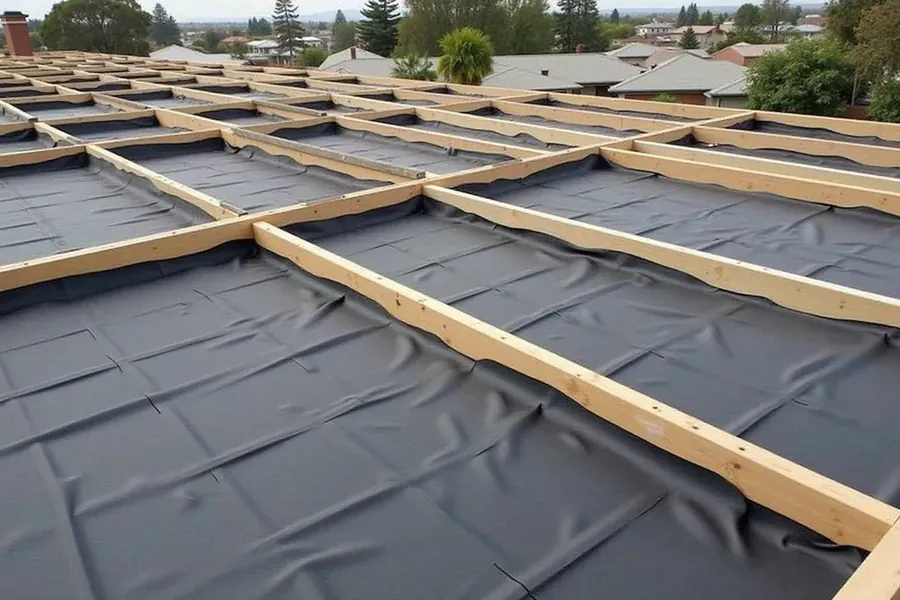
- repair torn underlayment under a damaged area
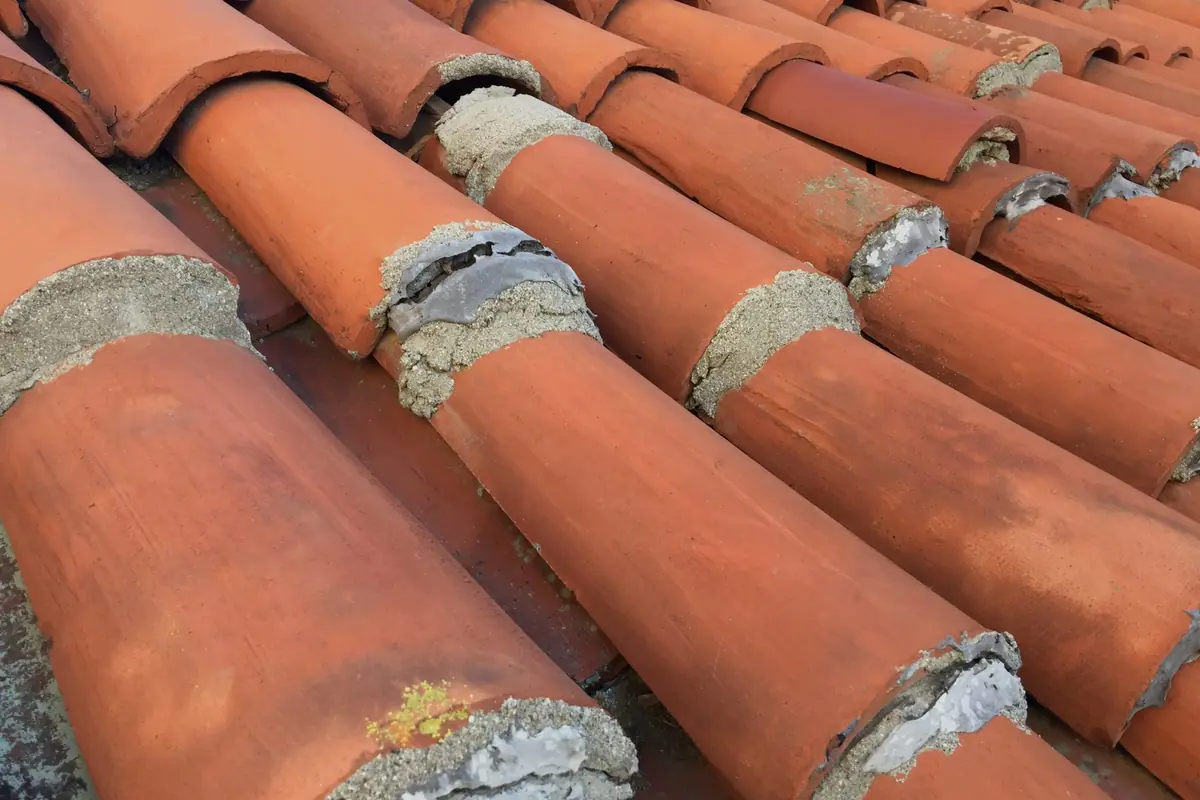
- re-bed loose hip and ridge tiles in fresh mortar
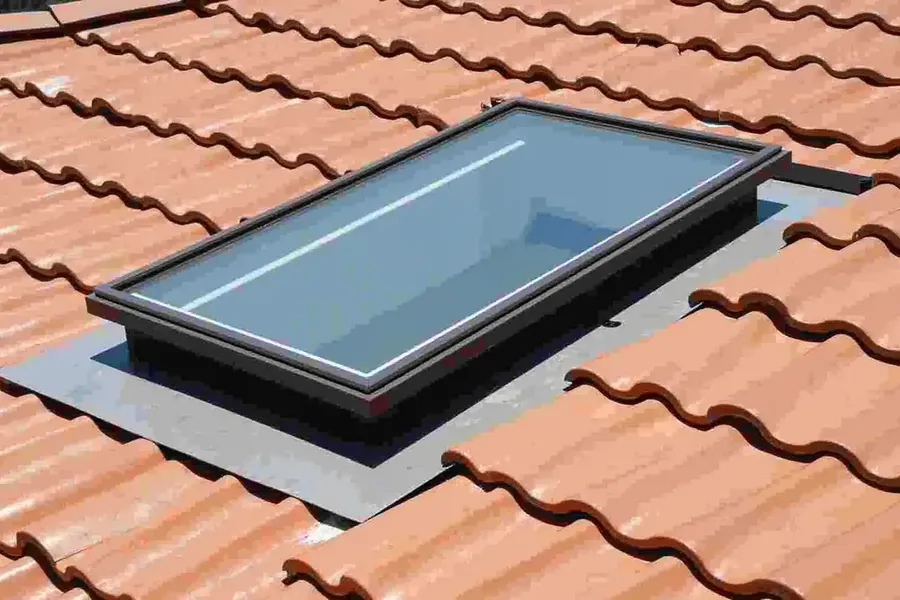
- repair or replace flashing at walls, chimneys, skylights, vents and valleys
- replace a whole tile roof, from tear-off to new tile
If the leak is on a part of your roof that is not tile, our roof leak repair service traces it. If water is coming in right now, go to emergency roof repair in Riverside. For every other job on your house, start at our page on roofing in Riverside.
Signs you need tile roof repair
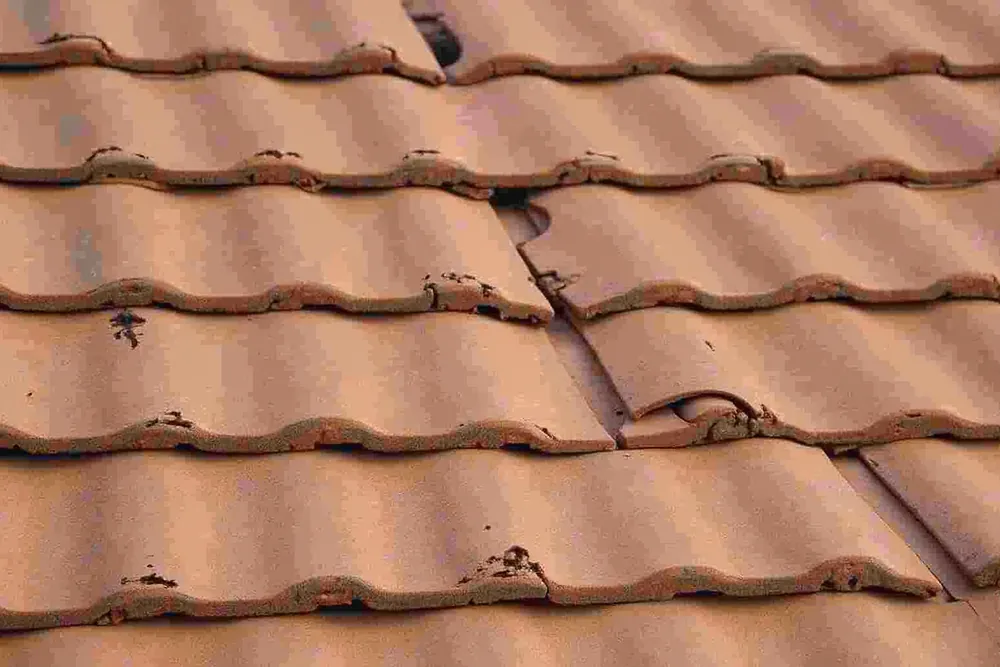
Look for cracked, slipped or missing tiles, tile pieces in the gutter, or a ceiling stain. Most show from the ground or the attic, so you do not need to go up.
- a tile sitting higher or lower than its neighbors, or a dark gap in a course
- broken tile pieces in the gutter, on a path or in a flower bed
- cracked or missing mortar on a hip or ridge tile
- a ceiling or wall stain under a tiled slope, worst after wind-driven rain
- damp wood, rot or daylight in the attic
- tiles knocked out of line after the Santa Ana winds, or after another trade has been on the roof
Not sure what you are seeing? Photograph it from the ground and describe it when you call.

Concrete, clay and mission tile we repair
Our roofing team works on concrete and clay tile in flat, S and barrel profiles, and finds the closest replacement for each broken one. Profile and size come first: a tile of another profile does not shed water like its neighbors.
- Concrete tile is cast from sand and cement, with the color through the tile or on its surface, flat or profiled.
- Clay tile is fired clay, glazed or unglazed; Spanish clay tile is the one on a Spanish-style house.
- Flat tile lies flat in courses, like a thick shingle.
- S tile is one piece with a rolled pan and cap, so each course forms a wave.
- Barrel tile is half-round, laid as pans and caps on a two-piece mission roof.
How we find a replacement tile. We lift a tile to read any maker’s mark on its underside, measure the profile and the exposure, and compare the color in daylight. When your profile is no longer made, we look for salvaged tile in the same profile, or move tiles from a slope nobody sees and put the closest new tile there. Weathered color can differ from new tile, and the quote says which route your roof needs.
Mission tile roof repair
We replace broken pans and caps on two-piece clay barrel roofs, and check the underlayment under them. The pans lie face up and carry the water; the caps cover the joints between them.
A broken cap opens a joint, and a broken pan opens the underlayment under it. We lift the caps around the damage, take out the broken pieces, check the underlayment and set new pans and caps back in their rows. Unlike S tile, which comes out one piece at a time, a repair at the ridge or eave of a mission roof can mean lifting several caps to reach one broken pan. Clay also weathers faster on a sunny slope than under an eave, so a new piece can look brighter than the old ones beside it.
Cracked and broken roof tile repair
We take out a cracked or broken concrete or clay tile and fasten a new one in its place. We check the underlayment while the tile is out.
Sealant over a crack weathers off and leaves the crack open again, so we replace the tile rather than seal it. A slipped tile needs the same attention, because the gap it leaves lets sun and rain onto the underlayment.
What cracks roof tiles:
- Foot traffic from anyone who does not know where to step: dish installers, painters, gutter cleaners, solar crews.
- Fallen debris, such as branches, or a ladder set against the tile edge.
- Fasteners that let go through corrosion or age, so a tile slides and knocks the one below.
- An uneven bed, where a tile rocks on the course under it and cracks under load.
- Weathering, which slowly wears the surface of old concrete tile.
Cracks on a tile roof only a few years old? That points to something that hit or stood on the tiles, or a tile that never sat flat, rather than to wear. We find the cause and fix it with the tile.
Broken roof tile replacement, step by step
We lift the tiles that overlap the broken one, take out the pieces, check the underlayment and fasten a new tile into the course.
- Find every broken and slipped tile, walking on the lower edge of the tiles, so one trip covers them all.
- Lift the overlapping tiles with wedges, enough to reach the broken one without cracking its neighbors.
- Remove the broken tile, pulling or cutting the old nail or clip.
- Check the underlayment it covered and repair any tear.
- Fasten the new tile with a corrosion-resistant fastener, as the code and the tile maker’s instructions set out.
- Lower the tiles above onto their laps over the battens and check the course locks together.
- Photograph the repair, so you see the damage and the finished work.
A tile repair takes a day or less, depending on the work.
Tile roof leak repair
On a tile roof the underlayment does the waterproofing, so we fix leaks under the tiles, not on top of them. We lift tiles at the leak and find where water slipped past the underlayment or the flashing.
Wind-driven rain gets under the tiles on any tile roof, and the underlayment carries it down to the eave. When the underlayment tears or wears through, that water finds the deck, and a new tile on top will not stop it.
Where we look on a leaking tile roof:
- the underlayment under broken, slipped or missing tiles
- flashing where the roof meets a wall, a chimney or a skylight
- valleys, where leaves pile up and push water out of the valley metal
- pipe flashings and vents cut through the tile
- hip and ridge mortar that has cracked or fallen out
- the drip edge and eave closure at the bottom course
What causes roof leaks after tile replacement? Usually underlayment torn while the tiles were off, a replacement tile that never seated, or flashing disturbed and not resealed. When the underlayment has failed across the roof, the fix is the underlayment job further down this page.
Repair or replace a tile roof
A few broken tiles or one leaking area is a repair; tiles failing across the slopes mean a new roof. There is a third answer: new underlayment under the tiles you already have.
What we check:
- The tiles: how many are cracked, how worn concrete tile’s surface is, and how many break when handled.
- The underlayment: sound where we lift tiles, or brittle and torn in several places.
- The flashing: rusted through or still sound.
- The deck: solid sheathing, or soft from old leaks.
A 35-year-old concrete tile roof: keep repairing or replace? Look at what keeps failing. A leak that keeps returning, or leaks in new places, means worn underlayment, which can be replaced under sound tiles. Tiles that break as fast as we replace them mean new tile.
Is roof tile restoration worth it? Cleaning and coating tiles changes how the roof looks but does nothing for failed underlayment, so on a leaking roof we quote the work that stops the water first. For a roof that is not tile, our roof repair page for Riverside covers the repair-or-replace call.
Full tile roof replacement
We strip the old tile to the deck, repair the sheathing, and lay new underlayment, flashing and tile. A tile re-roof takes one to two weeks, depending on the work.
- Inspect: the roof, the framing and deck from the attic, and your parcel against the fire hazard map.
- Quote: the scope, the tile by product and color, the underlayment, whether the City needs a permit and the price, in writing.
- Tear-off: the tile and the old underlayment, slope by slope.
- Deck repair: rotted sheathing replaced, loose boards refastened.
- Underlayment and flashing: new underlayment to the code for your slope, new flashing at every wall, chimney, valley and pipe.
- Fire-zone details: bird stops and mudded hip and ridge caps, where your address needs them.
- Tile: fastened to the code and the maker’s instructions, every perimeter tile included.
- Clean-up: we haul the debris away.
Moving from tile to shingle or metal, or the other way, is a materials choice: our guide to choosing a re-roof material compares tile with shingle and metal, including why some roofers steer you away from tile, and covers solar panels on a tile roof.
Downsides of a tile roof
Weight, breakage, reliance on the underlayment and hard-to-find replacement tiles are tile’s drawbacks. None rules tile out, but each changes what your roof needs.
- Weight: several times what asphalt shingles weigh (the figures are in the next section).
- Breakage: tiles crack under a careless foot, so every trade on your roof is a risk to it.
- The underlayment: the tiles shed most of the water and the underlayment stops the rest, so it can wear out under tiles that still look sound.
- Replacement tiles: a discontinued profile or color is hard to find, which slows a repair.
- Slope: a section pitched below the code minimum takes a different covering.
Tile roof weight and roof framing
Concrete tile weighs 12.0 pounds per square foot (psf) against 2.0 psf for asphalt shingles, so switching to tile needs a framing check. Replacing tile with tile keeps the same load, and we still check for sag.
The City of Santa Paula’s table of building material weights lists asphalt shingles at 2.0 psf, concrete roof tile at 12.0 psf and Spanish clay tile at 18.0 psf.
The U.S. Department of Energy’s Building America Solution Center guide to clay and concrete tile roofs puts the rule plainly: “roof framing and sheathing must be structurally adequate to support the weight”. So before we quote tile on a roof that had shingles, we look at the rafters or trusses from the attic: their size, their spacing, and any sag or cracked members.
If your framing needs reinforcing for tile, we tell you before you choose. A structural engineer designs that work.
Tile roof code rules in California
The 2025 California Residential Code (CRC) sets a minimum slope, two underlayment layers on low slopes, and fastened perimeter tiles. We install and repair tile to it.
From the 2025 California Residential Code, Chapter 9, roof assemblies:
- Slope (R905.3.2): “Clay and concrete roof tile shall be installed on roof slopes of 2½ units vertical in 12 units horizontal (25-percent slope) or greater.”
- Underlayment at low slope: on slopes from 2½ in 12 up to 4 in 12, the “underlayment shall be two layers applied”.
- Fastening (R905.3.8): tiles “shall be fastened in accordance with this section and the manufacturer’s installation instructions”, and “Perimeter tiles shall be fastened with not less than one fastener per tile.”
- The perimeter (R905.3.7): the perimeter fastening areas run “three tile courses but not less than 36 inches” from either side of hips and ridges and from the edges of eaves and rakes.
Fastening on the rest of the roof changes with wind exposure and the tile, so we work to the maker’s instructions for your product.
Who can repair a tile roof? In California, a roofing contractor is licensed under the C-39 Roofing classification. The Contractors State License Board (CSLB) C-39 Roofing classification says: “A roofing contractor installs products and repairs surfaces that seal, waterproof and weatherproof structures.” You can check any roofer’s license on the CSLB’s Check a License page before you hire.
Class A fire rating for tile roofs
In a High or Very High fire hazard severity zone, new roofing has to be Class A. On a tile roof the rating comes from the whole assembly, and we check your parcel against the City’s map before we quote.
California’s 2025 Wildland-Urban Interface Code, section 504.2, asks for a roof assembly that “complies with a Class A fire classification when tested in accordance with ASTM E108 or UL 790”. Clay or concrete tile “installed on noncombustible decks” counts as equivalent to Class A without that test. On a plywood or board deck, the Class A rating comes from a tested, listed assembly: the tile together with what goes under it. The City of Los Angeles Department of Building and Safety fire hazard zone checklist quotes these state code sections by number.
The City of Riverside’s fire hazard severity zone map data holds Local Responsibility Area zones only, classed Moderate, High and Very High. When an older roof has to comply, and the Class A rule for every roof type, are under Class A roofs on a Riverside re-roof.
Bird stops on tile roofs in fire zones
On a wood deck under S or barrel tile, the state’s wildfire building code calls for bird stops, mudded caps and a cap sheet. Flat tile leaves no open ends at the eave.
The code’s wording, in section 504.2.1.1, as the City of Los Angeles fire hazard zone checklist quotes it:
- It applies “Where the roof covering is installed over a combustible deck and the roofing profile creates an airspace under the roof covering”.
- The installation then needs “a 72 lb. cap sheet complying with ASTM D3909” over the roof deck.
- “bird stops shall be used at the eaves when the profile fits, to prevent debris from entering the eave.”
- “Hip and ridge caps shall be mudded in to prevent intrusion of fire or embers.”
Section 504.2.1.2 gives the other route: an underlayment listed and labeled after being tested with the roof assembly for Class A, to ASTM E108 or UL 790, with the same bird stops and mudded caps.
What a bird stop is. An eave closure, metal or preformed, that fills the rounded openings under the first course of S or barrel tile so debris cannot pack in under the tile. On a re-roof or an eave repair, we check whether your address falls under these rules.
Cool-rated tile for a Riverside re-roof
When your tile re-roof falls under Title 24’s cool-roof rule, the new tile needs a cool rating for Riverside’s climate zone. We name the product and its rating on your quote.
Title 24 is California’s building energy code, and our cool roof rules for a re-roof set out when the rule applies and its exemptions.
Riverside is California building climate zone 10 (CZ10), per the California Energy Commission’s Building Climate Zones. For a steep-slope re-roof on a single-family house in CZ10, the covering needs an aged solar reflectance of at least 0.20 and a thermal emittance of at least 0.75, or a solar reflectance index (SRI) of at least 16, per the Cool Roof Rating Council’s summary of the 2025 Energy Code.
Two tiles in a similar color can carry different ratings, so ask for the rating before you choose a color.
Riverside Public Utilities offers a rebate of $0.10 per sq ft on a CRRC-rated cool roof product, subject to funds, applied for within 90 days of purchase. The details are on the Riverside Public Utilities weatherization rebates page, and the product’s rating is in the CRRC Rated Products Directory.
Does tile roof repair in Riverside need a permit?
Yes, for the repairs the City of Riverside’s asphalt shingle re-roof handout names:
“A re-roofing permit is required when replacing sheathing or when new sheathing is to be installed on the roof (such as solid sheathing over spaced sheathing). A permit is required when dry rot repairs reach 32 sq. ft. or more of replaced decking, or any alteration or repairs occurs to the rafters, rafter tails or any structural members except a fascia board.”
For a smaller repair, we ask City of Riverside Building and Safety before we start rather than guess.
What a tile re-roof permit costs. The City of Riverside’s base permit fee for a residential re-roof is $116.00 for a tear-off and re-roof, for the first 1,000 sq ft, then $25 for every 500 sq ft after that. It is in the City of Riverside Building & Safety Fee Schedule. That is the City’s base fee; where a permit is needed, it is part of the job’s cost.
How much does tile roof repair cost in Riverside?
A concrete tile re-roof runs $18,000 to $50,000, from entry-grade to premium tile. A clay tile re-roof runs $24,000 to $65,000 or more.
A repair of a few broken tiles is the small end of tile work, and you get its price in writing before any work starts. Eight things set the price of either job:
- Roof size: more tile, underlayment and labor on a re-roof.
- Pitch and complexity: a steep roof goes slower; hips, valleys and dormers add cut tiles and flashing.
- Access: a single-story roof over a driveway loads quicker than a two-story roof over a pool.
- Concrete or clay, and its grade: the profile, finish and color move the price.
- Tile weight and breakage: tile is heavy to carry up, and a repair allows for tiles that crack when lifted.
- Underlayment type, and whether low slopes need two layers.
- Flashing and valleys: each wall, chimney, skylight and valley needs flashing under the tile.
- Deck and sheathing repair found at tear-off: Rotted decking found at tear-off runs $110 to $170 a sheet to replace.
For a first figure on a smaller job, try our roof repair cost estimator for Riverside. Comparing quotes? Line them up on the same scope: tiles replaced, new or salvaged, underlayment work, flashing, mortar and whether the City needs a permit.
Tile roof underlayment replacement
When the underlayment has failed under sound tiles, we lift the tiles, replace the underlayment and relay the same tiles. You keep the tile you have.
A tile roof lift and relay runs $8,000 to $15,000 for the whole roof. On the roof it takes several days, depending on the work.
What the job involves on your roof:
- We lift the tiles slope by slope and stack them on the roof, ready to go back.
- We strip the old underlayment and check the deck under it, replacing soft sheathing.
- We lay new underlayment and fit new flashing at walls, valleys, chimneys and pipes.
- We relay your tiles in their courses, replacing broken ones.
Signs your roof is heading there: leaks in more than one place, a leak that returns after tile repairs, or underlayment that is brittle wherever we lift a tile. We show you what we find before we suggest it.
The underlayment types, how long underlayment lasts and how the job compares with a full tile replacement are on our page for tile roof underlayment replacement in Riverside.
Tile roof maintenance
Clear valleys, gutters and eaves, replace cracked or slipped tiles before the rains, and check the ridge mortar. Tile itself asks for little.
The Tile Roofing Industry Alliance FAQ calls concrete tile “very low maintenance” and clay tile with a matte or glazed finish “essentially maintenance-free”, and notes that “Regular maintenance and inspection of roof tiles can help identify early signs of mortar deterioration.”
Debris left in a valley blocks drainage and pushes water under the tile. When we do the work, we also check flashing at walls, chimneys and pipes for rust and lifted edges, and look at the underlayment wherever a tile is out.
How often should a tile roof be cleaned or checked? Clean valleys, gutters and eaves whenever debris builds up, and have the tile checked when you see a slipped tile or after another trade has been up. For a written report on the whole roof, book a roof inspection in Riverside.
Walking on a concrete tile roof
Leave it to the roofer: tiles crack under a misplaced foot, and a crack lets water through. So call us before you go up.
The industry’s own manual, the Tile Roofing Industry Alliance’s Concrete and Clay Roof Tile Installation Manual, 2024 Edition, says: “Walking on roofing tile should be avoided and only done with extreme caution.”
That manual is written for roofers, and we work to it. Where our crew has to cross the tile, it puts weight only on the head-lap, the lower part of each tile where it overlaps the course below, because “This distributes the load near the bearing points of the tile.”
On longer jobs it adds: “The tile surface can also be safely covered with secured plywood or roof pads available from many roof tile manufacturers to distribute traffic loads”. Tile can crack under any foot, which is why the manual’s head-lap rule matters.
When a solar crew, a painter or a dish installer has been up, call us to check the tile. A cracked tile costs less to replace the week it cracks than after a winter of rain.
Tile roof repairs that go wrong
Most bad tile jobs come down to a sealed crack, an unseated tile, torn underlayment left behind or old flashing reused. A correct tile repair replaces the tile rather than sealing it, seats it in its course, repairs the underlayment under it and replaces rusted flashing instead of bending it back.
Tile roof done last year, and now cracked tiles or a leak? Have it checked before the rains. We lift tiles at the problem, photograph what we find and quote the fix in writing.
Warranty terms depend on the work, and we write them into your quote.
Tile roof repair across Riverside neighborhoods
We repair tile roofs in every Riverside neighborhood, from Airport to Wood Streets.
Pick yours: tile roof repair in Airport, Alessandro Heights tile roof repair, tile roof repair in Arlanza, Arlington, Arlington Heights, Arlington South, Canyon Crest tile roofs, Casa Blanca, Downtown, Eastside, Grand, Hawarden Hills, La Sierra, La Sierra Acres, La Sierra Hills, La Sierra South, Magnolia Center, Mission Grove, Northside, tile roof repair in Orangecrest, Presidential Park, Ramona, Sycamore Canyon Park, Sycamore Canyon/Canyon Springs, University, Victoria and Wood Streets tile roof repair.
Tile roof repair questions
Can you repair a tile roof?
Yes: we repair concrete and clay tile roofs, replacing broken tiles and fixing the underlayment and flashing under them. When the tiles are failing across the slopes, we replace the roof instead.
Is it expensive to replace roof tiles?
Replacing a few roof tiles is a small repair, done in a day or less, depending on the work; a whole tile re-roof is the big job. Its market range is in the cost section above, and your quote names each tile.
How much does it cost to replace a single roof tile?
One roof tile is the smallest tile repair we do, and it takes a day or less, depending on the work. We replace the tile and check the underlayment under it, and the written estimate comes before any work starts.
Will a roof leak with one tile missing?
It can: the gap leaves the underlayment open to the sun and rain the tile kept off it, and exposed underlayment fails. Get the tile back in before the rains.
Can you repair cracked roof tiles?
Not by patching: we replace a cracked roof tile and check the underlayment while the tile is out. A sealed crack opens again as the sealant weathers.
What are the common causes of leaks in tile roofs?
Torn or worn underlayment, broken or slipped tiles, rusted flashing, blocked valleys and cracked ridge mortar cause most tile roof leaks. We lift tiles at the leak to find which one it is.
Can you repair just a section of a tile roof?
Yes: when the underlayment has failed in one area and the rest is sound, we can relay that section rather than the whole roof. We set that scope from what the lifted tiles show.
How much does it cost to repair a clay tile roof?
Replacing broken clay tiles and pieces is a small repair, done in a day or less, depending on the work. A clay tile re-roof runs $24,000 to $65,000 or more.
What are the common problems with clay roof tiles?
Cracked and broken tiles from foot traffic or debris, slipped caps on mission roofs, hard-to-match weathered color, and underlayment wearing out underneath.
Do clay roof tiles need to be nailed down?
Yes: the 2025 California Residential Code says roof tiles shall be fastened to its rules and the maker’s instructions, with one fastener per perimeter tile at least. We fasten every tile we replace.
What is the minimum slope allowed for a clay tile roof?
2½ in 12: the 2025 California Residential Code allows clay and concrete tile only on slopes of 2½ units vertical in 12 or greater. Below that, a section needs a different covering.
How long does a tile roof last in California?
As long as its tiles and the underlayment under them stay sound, and we read yours by lifting tiles. The underlayment is the layer we check first; replace the roof when the tiles are breaking and wearing out across the slopes.
Call for a tile roof repair quote
Call our roofing team, tell us whether your tile is concrete or clay and what you see, and we come and look. You get a written estimate before any work starts, and you decide whether to go ahead.
Your tile roof quote lists:
- the tiles we replace, and whether they are new or salvaged
- the underlayment, flashing and mortar work
- for a re-roof, the tile by product and color, its fire class and, where needed, its cool rating
- whether your job needs a City permit, and which inspections apply
- the price
- how long the job takes, depending on the work
In California, the down payment on a home improvement contract can’t be more than $1,000 or 10 percent of the contract price, whichever is less. The rule is in California Business and Professions Code section 7159, and the CSLB explains what a home improvement contract must include.