Roof Inspection and Tile Roof Inspection in Riverside, CA
A roof inspection in Riverside, CA is a roofer on your roof and in your attic, then a written report with photos.
We inspect asphalt shingle, concrete and clay tile, metal and flat roofs on houses across the city.
A roof inspection takes one to two hours on site, and the report reaches you within two days, depending on the work. We answer calls 24 hours a day, 7 days a week: call us and tell us what roof you have.
What you get when you book a roof inspection
You get a roofer on your roof and in your attic, checking the covering, flashing, vents, ridge and gutters, then a written report.
Each part goes in your report, sound or not, and we recommend a repair only where the report shows the fault. Each roof type fails its own way, so our roofer checks the covering for its own faults:
- Asphalt shingle: lifted tabs and broken seal strips, creased and cracked shingles, missing shingles, granules washing into the gutters, curled edges, and nails backing out.
- Concrete and clay tile: cracked, slipped or missing tiles, the ridge mortar and the underlayment, as set out in the tile section below.
- Metal: loose or missing screws, worn rubber washers on exposed-fastener panels, open seams on standing seam, and the cut edges and scratches where rust starts.
- Flat and low-slope sections: blisters, splits and open seams in the membrane, water still ponding after rain, and the joint where the flat section meets the pitched roof.
Then the parts every roof has:
- Flashing: step and counter flashing where the roof meets a wall or a chimney, valley flashing, skylight flashing, and the drip edge along the eaves.
- Penetrations: the rubber pipe boots around plumbing vents, the roof vents, and anything fastened through the roof, such as a satellite mount or solar racking.
- The ridge and hips: ridge caps, ridge vents, and the mortar or fasteners that hold them down.
- Drainage: gutters, downspouts and valleys, and anywhere leaves hold water against the roof.
- The attic: daylight through the roof deck, water stains, soft or dark sheathing, mold, and a ventilation check on the attic vents.
- Fascia and soffits: the boards along the eaves, where a slow leak shows as rot and peeling paint.
Sun and heat age shingles and the rubber parts of a roof first, and a flat section over a porch or a garage is where water sits longest. Repairs to low-slope sections are on our flat roof repair page.
A roof check or a roof assessment is the same visit, and a roofer’s job: someone who repairs roofs for a living knows a tired pipe boot before it leaks.

Tile roof inspection in Riverside
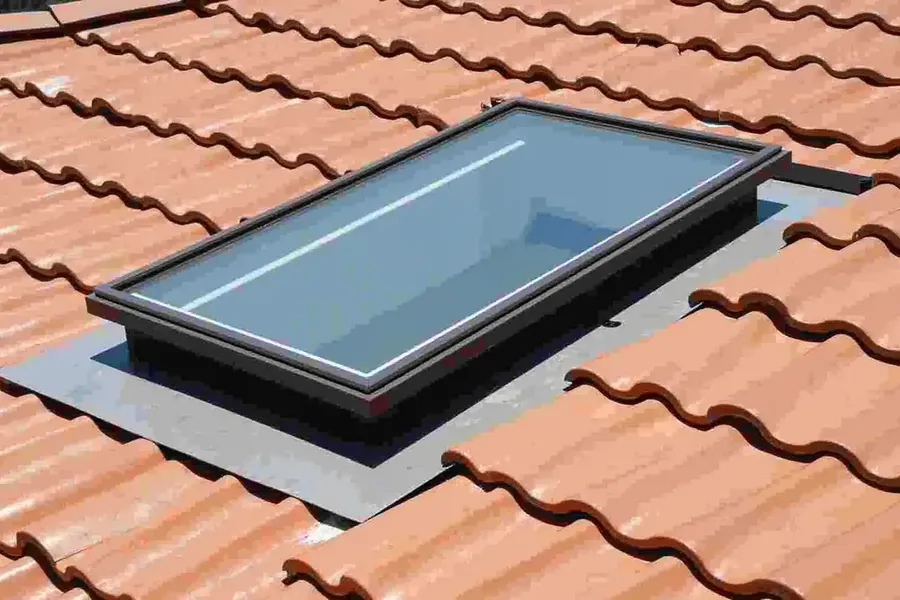
A tile roof inspection checks for cracked, slipped and missing tiles, the hip and ridge mortar, and the underlayment beneath the tiles.
On a tile roof the underlayment keeps the water out, so the tiles can look sound from the street while the layer under them wears through.
Concrete and clay tile cracks underfoot, so our roofer steps only on the head-lap of each tile, views the rest from the eaves, and photographs every tile we flag. Where it is safe, we lift a tile to see the underlayment, and we look for stains and damp deck from the attic.
Your tile roof inspection report lists:
- every cracked, slipped or missing tile, with a photo and its place on the roof
- the hip and ridge tiles, and whether their mortar has cracked or fallen out
- the underlayment where we could see it, and the deck underneath
- the flashing at walls, chimneys and skylights, and the valleys, where leaves push water under the tile
- the bird stops and eave closures on S and barrel tile, where your roof has them
- what we recommend: nothing yet, a tile repair, or new underlayment under the same tiles
When the report finds broken tiles, tile roof repair in Riverside replaces them. When the underlayment has failed under sound tiles, tile roof underlayment replacement keeps your tile on the roof. Either repair goes on a written estimate before any work starts, and you decide whether to go ahead.

The steps of your roof inspection
A roofer looks from the ground, walks the roof where it is safe, checks the attic, then writes your report.
- We ask what you have seen. A stain, a drip, a noise in the wind, a past repair, and the roof’s age if you know it.
- We look from the ground. A sagging line along the ridge or the eaves, missing pieces, and the state of the gutters and downspouts.
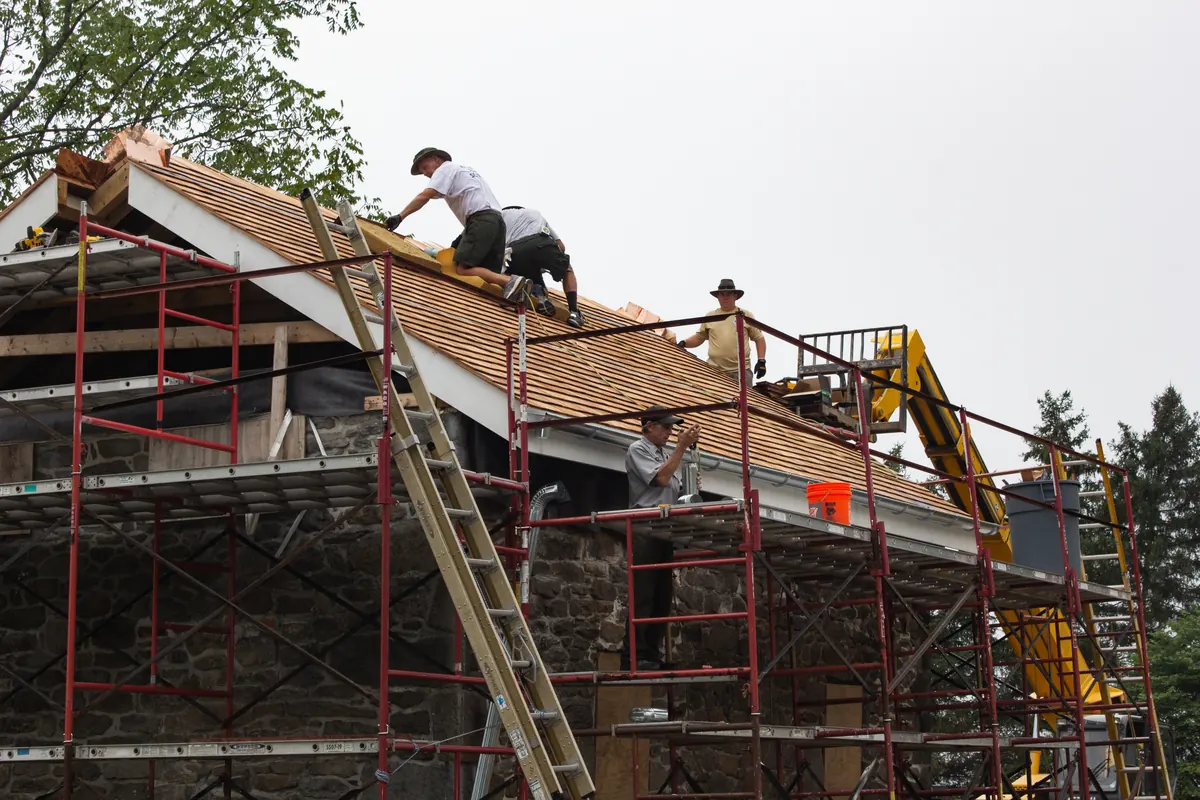
- We go up on the roof. We check the covering, the flashing, the vents and the ridge, and take photographs of what we find. Where a slope is too steep or too fragile to walk, the roofer views it from a ladder at the eaves.
- We go into the attic. An attic inspection shows the underside of the deck: daylight, water stains, soft sheathing, mold, and whether the vents are open.
- We write the report. What we found, where on the roof, with photos, and what we recommend.
Your written roof inspection report
Your written report shows what we inspected, what we found on each part of the roof, a photo of every problem and what we recommend. You keep it whether or not you have any work done.
The report lists:
- the covering, its pitch, and the parts your roof has: valleys, skylights, a chimney, vents, flat sections
- the condition of each part, sound or not
- each problem, with where it is on the roof and a photo
- what caused it, where we can tell: wind, sun, a failed seal, a loose fastener, debris or age
- what we recommend: nothing yet, a repair now, a repair before the rain, or a closer look at one spot
- the attic: ventilation, stains and the state of the deck
You can take the same report to any licensed roofing contractor and compare their quote with ours on the same findings.
Roof inspection cost in Riverside, CA
A one-story shingle roof with an attic hatch is the small end of an inspection; a steep two-story tile roof without one, the large end. Any charge is confirmed when you book.
What the visit takes comes down to your roof’s size, its pitch and complexity, and how easy it is to reach:
- Roof size. A bigger roof has more covering, flashing and ridge to inspect, and more to photograph and write up.
- Pitch and complexity. A steep roof takes harnesses and more time, and hips, valleys, dormers, skylights and a flat section each add joints to check.
- Access. A one-story roof over a clear driveway is quicker to reach than a two-story roof over a pool or a fenced side yard, and an attic with a hatch you can reach is quicker than one with none.
Whatever any company charges for a roof inspection, ask what you get for it before you book: a photo of every problem, and a report in writing that you keep.
Repairs the inspection finds go on a written estimate before any work starts, and you decide whether to go ahead. For a first look at what those repairs run around Riverside, our roof repair cost estimator shows the market’s range for each job.
When to book a roof inspection
Have your roof inspected when you see a ceiling stain, find roofing in the yard, or after a strong wind or heavy rain.
The National Roofing Contractors Association recommends scheduled roof inspections at least twice a year, preferably in spring and fall, and more after severe weather (NRCA in *Professional Roofing*). We recommend the same here: a fall inspection before Riverside’s rain season, a spring one after it, and another after a strong wind or after another trade has worked on your roof.
Signs your roof needs an inspection sooner:
- a water stain on a ceiling or a wall, or a damp smell in the attic
- shingles, tiles or ridge caps in the yard or in the gutter
- granules piling up at the bottom of the downspouts
- daylight through the attic deck
- a sagging line along the ridge or the eaves
- a slipped tile you can see from the ground
- an old patch you were never sure about
A roof that is older, has been patched before, or has tile or flat sections earns the closer watch. If water is already coming through the ceiling, you need a repair: roof leak repair in Riverside traces the water to where it gets in.
Book a roof inspection before Riverside’s rain season
September or October is the time for your fall roof inspection, so any repair is done while the roof is dry.
At the Riverside Municipal Airport station, 6.21 of the year’s 9.37 inches of rain fall in December through February and 0.15 inches in June through August (NOAA NCEI 1991-2020 seasonal normals, USW00003171). A roof can sit dry for months between rains, so a cracked tile or a split pipe boot goes unnoticed until the first storm of the local rain season finds it.
A pre-season inspection checks the parts the first rain tests: the valleys, the flashing at walls and chimneys, the pipe boots, and the gutters and downspouts that carry the water away. The spring inspection then finds what the winter’s rain and wind did.
Roof inspection after a wind storm
After a strong wind, a roof inspection finds lifted shingles, slipped tiles, bent flashing and loose ridge caps before the next rain gets under them. Wind damage is easy to miss from the ground, so call us and tell us what you can see.
A shingle can lift, break its seal strip and lie back down looking flat, and a tile can shift without falling. After a wind, our roofer checks for:
- broken seal strips and creased shingle tabs
- missing shingles and bare underlayment
- slipped, cracked or missing tiles, and lifted ridge and hip tiles
- flashing bent away from a wall or a chimney
- roof vents and ridge caps worked loose
- branches and debris on the roof and in the valleys
The report records each with a photo, the date and what we recommend: the damage assessment you need before any repair. If the wind has torn the roof open and water is coming in, skip the inspection and call for emergency roof repair. Wind damage with no water coming in is a scheduled job: see roof repair in Riverside.
Roof inspection reports for insurance claims
A roof inspection report records the damage, where it is, when we found it and what caused it, with dated photos. You can attach it to an insurance claim.
The report stands on its own: a photo of each problem, its place on the roof, and the repair we recommend for it. How a roof claim runs, with the insurance adjuster’s visit and what to keep, is on our storm damage and emergency roof repair page.
If you need a record of your roof’s condition for an insurance policy, the same written report describes the covering, the flashing, the attic and any defects.
An independent roof inspection and a second opinion
An inspection is independent when its report stands on its own: a written description, a photo of every finding and a recommendation. That is how we write ours.
You can hand our report to other licensed roofers for a second quote on the same findings, or a second opinion on the same photos, before you choose who repairs the roof. If someone knocks on your door offering to look at your roof, ask what you would ask us: what you get in writing, and whether the photos will be of your own roof.
Before you hire anyone to inspect your roof, look up their license on the Contractors State License Board (CSLB) Check a License page.
Selling a home: roof inspection or roof certification
If you are selling, ask for a roof certification: an inspection report is written for you, a certification for the sale. It goes to the other side of the sale: your agent, your buyer or escrow.
Both start the same way, with a roofer on the roof and in the attic. An inspection report lists what we found and what we recommend, and you decide what to do and when. A certification is signed once the roof is in the condition it states, so any repair it needs comes first.
The questions around a certification depend on the sale: when to order it, who pays for it, what it costs, what has to be repaired before a roofer will sign, and what it means for your buyer. If you are buying, the same questions come from the other side: whether to ask for one, and what the seller’s roofer found. Our roof certification service in Riverside answers each of them, so start there if a sale is what brought you here.
Problems a roof inspection finds, and the repairs
A roof inspection finds failed flashing, cracked pipe boots, lifted or missing shingles, cracked or slipped tiles, blocked valleys, weak attic ventilation and rotted deck. Each goes in your report with what we recommend.
- Failed flashing at a wall, chimney or skylight is where water gets in first. It needs new metal, not a bead of caulk over the gap.
- Cracked pipe boots let water run down the pipe into the attic. A new boot is a small repair.
- Lifted, creased or missing shingles after a wind need replacing and sealing before the rain.
- Cracked or slipped tiles leave the underlayment beneath them open to sun and rain.
- Blocked valleys and gutters hold water against the roof and push it under the edge.
- Weak attic ventilation traps heat under the deck and ages the roof from below.
- Rot, rust and mold: rotted deck around an old leak, rust at metal flashing and fasteners, and mold on the attic side of the sheathing.
If the report shows wear across every slope, the question becomes repair or replace, which our roof repair page answers, and a full roof replacement is on our roof replacement page.
Roof inspection questions
How long does a roof inspection usually take?
A roof inspection takes one to two hours on site, and the report reaches you within two days, depending on the work. When you book, we tell you both for your roof.
A one-story shingle roof over a clear driveway, with an attic hatch in the hallway, is quicker than a steep two-story tile roof with no hatch. Every valley, skylight and flat section adds joints to check and photograph.
How much does it cost to hire a roof inspector?
A one-story shingle roof is the small end of an inspector’s charge, a steep two-story tile roof the large end. Your roof’s size, pitch and access set where yours falls. Any charge is confirmed when you book, and for that you get one to two hours on site and a written photo report within two days, depending on the work.
What will fail a roof inspection?
Nothing fails a roof inspection: it is a written report of what we found, not a pass or a fail. Each problem is marked with what we recommend and how soon.
A pass or a fail belongs to a roof certification for a home sale, where the roofer signs only once the repairs it needs are done. On an inspection, the findings that call for work now are open flashing, cracked pipe boots, missing shingles or tiles, and soft or rotted deck.
Can a home inspector inspect a roof?
Yes, but only noninvasively under California law; a roofer walks the roof, lifts a tile or shingle and checks the attic.
California law defines a home inspection as “a noninvasive, physical examination” of a home’s systems and its “structural and essential components”, done in connection with the transfer of a home and “designed to identify material defects” (California Business and Professions Code section 7195). The home inspector’s report can recommend evaluation by appropriate persons. When it points at your roof, a professional roof inspection is that evaluation: we walk the covering where it is safe, lift a slipped tile or a loose shingle, and check the underside of the deck from the attic.
Can a roofer do roof pointing?
Yes. On a tile roof, pointing is the mortar along the hips and ridge, and our roofer checks it on every tile roof inspection. Cracked or missing mortar lets ridge tiles loosen and lets water and birds in. We note each run in the report with a photo, and our tile roof repair page covers the repair.
What is the best way to find a reputable roofer?
Ask for a written report with photos of your own roof before any repair quote. A roofer who shows you the findings gives you something to compare. Our homepage on roofing in Riverside covers what to ask before you hire.
Do you need a license to be a roofer in California?
Yes, for work of a set dollar value or more, or any job needing a building permit: that work takes a licensed contractor. The line is set in California Business and Professions Code section 7048. The same rule covers a handyman: a small job under the line with no permit needs no contractor’s license, and anything above it does.
Should a 20 year old roof replace?
Not on age alone: a roof inspection shows whether your 20 year old roof needs a repair, new underlayment or replacing. Two roofs of the same age can be in different shape, depending on the material, the sun they get and how well the attic breathes. If the report shows wear across every slope, our roof repair page sets out the repair-or-replace decision.
Roof inspection pages for each Riverside neighborhood
We inspect roofs across the City of Riverside, and each neighborhood has its own roof inspection page. Call us and tell us yours.
Pick your neighborhood: roof inspection in Airport, roof inspection in Alessandro Heights, roof inspection in Arlanza, roof inspection in Arlington, roof inspection in Arlington Heights, roof inspection in Arlington South, roof inspection in Canyon Crest, roof inspection in Casa Blanca, roof inspection in Downtown, roof inspection in Eastside, roof inspection in Grand, roof inspection in Hawarden Hills, roof inspection in La Sierra, roof inspection in La Sierra Acres, roof inspection in La Sierra Hills, roof inspection in La Sierra South, roof inspection in Magnolia Center, roof inspection in Mission Grove, roof inspection in Northside, roof inspection in Orangecrest, roof inspection in Presidential Park, roof inspection in Ramona, roof inspection in Sycamore Canyon Park, roof inspection in Sycamore Canyon/Canyon Springs, roof inspection in University, roof inspection in Victoria and roof inspection in Wood Streets.
Book a roof inspection in Riverside
Call us, tell us what made you call and what roof you have, and we book a roofer to inspect it. Our roofing team answers 24 hours a day, 7 days a week.
When you call, tell us:
- what you have noticed: a stain, a drip, missing pieces, or nothing yet
- whether there has been a strong wind or a heavy rain since
- the roof type, if you know it: shingle, tile, metal or flat
- whether there is an attic hatch, and where it is
- any past repairs, and a rough age for the roof
When you are ready, use the call button on this page.