Roof Inspection in Sycamore Canyon/Canyon Springs, Riverside, CA
Roof inspection in Sycamore Canyon/Canyon Springs, Riverside, CA: one to two hours on site, a written photo report within two days, depending on the work.
Our roofing team answers 24 hours a day, 7 days a week; emergency calls answered around the clock on (951) 433-4486. A roof looked at before the winter rain gets its faults fixed while the weather still lets us work. Any charge for the inspection is confirmed when you book.
Residential roof inspection near Sycamore Canyon/Canyon Springs
We inspect house roofs on the streets around Sycamore Canyon/Canyon Springs, the City neighborhood on Riverside’s eastern side.
The person who comes is a roofer from Riverside Roof Repairs, a company that also repairs what it finds, so each fault gets a plain answer about what fixing it involves. When you call us, tell us what you have noticed, and we can start there. Any repair comes as a written estimate before any work starts, and you decide whether to go ahead.
Good times to call us:
- Before you list the house, so you know what a buyer’s inspector will see on the roof.
- After a wind event, when a shingle tab or a ridge tile has turned up in the yard.
- When paint is bubbling on a ceiling or a closet wall smells damp.
- When you cannot remember the last time anyone climbed up there.
A ceiling that is already dripping needs a trace, not an inspection: book roof leak repair near Sycamore Canyon/Canyon Springs and we find the entry point first.
The roof inspection report: numbered photos and a repair estimate
You get a written report with a numbered photo for each problem, a note of where it is, and a plain judgment on its urgency.
It arrives within two days of the visit, depending on the work. Inside:
- A roof summary: the covering, the layout of slopes and flat sections, and how the water leaves the roof.
- Numbered findings: each with its photograph, a sentence on what it is, and a condition rating of urgent, plan for it, or no action.
- Attic notes: the underside of the deck, signs of past water, the insulation, and airflow.
- Repair estimate: a written estimate for any repair the findings call for, before any work starts.
The numbering matters. When you phone us about “finding 4”, we are both looking at the same photograph of the same spot. The report is yours to keep. The roof inspection page for Riverside explains how we use the same format citywide.
Shingle, tile and low-slope roofs on one roof inspection
Every surface of your roof is inspected on one visit, the pitched main roof and any low-slope porch, patio or garage section alike.
The checks change with the material:
- Asphalt shingle roofs: cracked shingles, exposed asphalt where the granules have gone, tabs creased by wind, seals that have let go, and nails that have backed up through the course.
- Concrete and clay tile roofs: broken or slipped tiles, gaps at the hips and ridge, cracked ridge mortar, and the condition of the underlayment we can see through any gap. On clay we stay off brittle sections and photograph them from the ladder.
- Low-slope sections: seams opening at the laps, blistered or cracked membrane, ponding marks and scuppers or drains clogged with debris.
- Metal roofing: backed-out fasteners, worn washers, corrosion at laps and cut edges, and sealant breaking down at the trim.
Weathering shows up first on the slopes that face the afternoon sun, so we compare those against the shaded side. Tile that needs more than a few pieces goes to tile roof repair near Sycamore Canyon/Canyon Springs, and a failed low-slope section to flat roof repair near Sycamore Canyon/Canyon Springs.

Our roof inspection method: ground, ladder, attic, photos
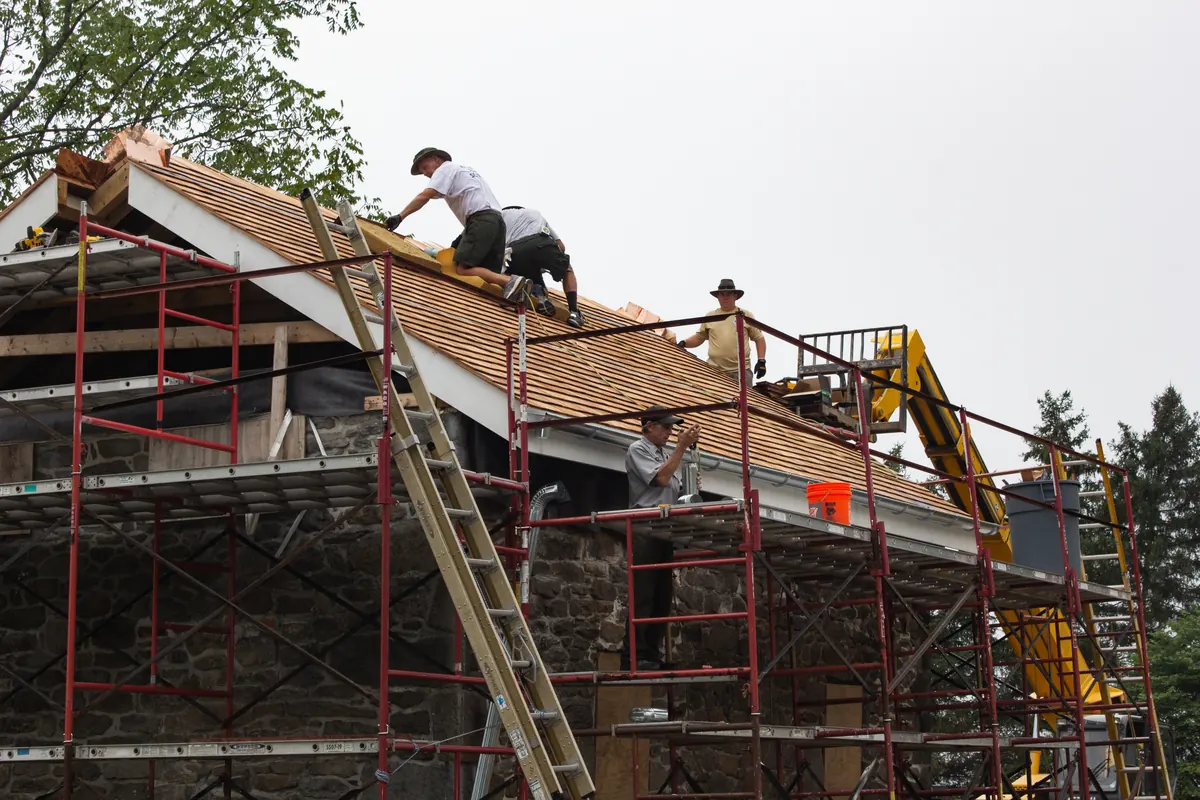
We work around the outside first, climb at the eaves, cross the roof where it is safe, then finish in the attic.
- Outside, at ground level. We walk the house looking at the roofline for any sag and at the fascia and stucco under the eaves for stains.
- At the eaves, from the ladder. On sloping ground we level and brace the ladder’s feet before anyone climbs. From the top rung we read the drip edge, the first course and any shed granules.
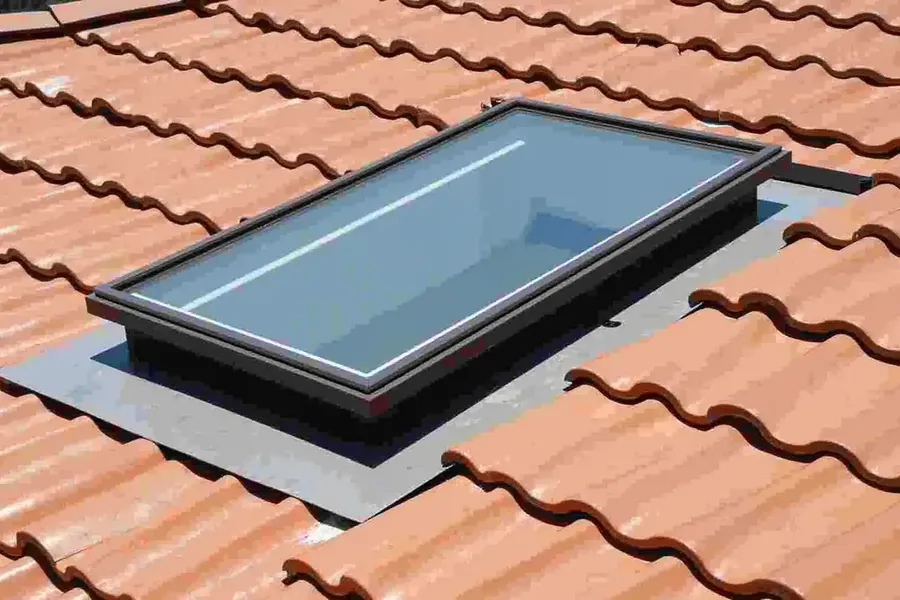
- On the roof. A visual inspection of each safe slope: worn flashing at walls and chimneys, the chimney cricket, pipe boots, furnace flue collars, skylights, valleys and ridge vents. We also note the pitch, the inches the roof rises across each 12 inches of level run, because it decides which slopes we walk and which we read from the edge.
- In the attic. The attic inspection traces water stains on the deck, presses for soft spots, looks for daylight and rusted nails, and ends with a ventilation check of the soffit and roof vents.
Photographs are taken at every stage, before we touch anything, and each one becomes a line on the report.
A home inspector reports on the whole house, and the roof is one heading among many. We inspect only the roof, from its edge to its attic. When a home inspection has queried your roof, have a roofer’s report beside it to compare before you agree to a price or a repair.
How often to book a roof inspection, by NRCA
Twice a year at least, ideally in spring and fall, plus once after any severe weather.
That interval is the one the National Roofing Contractors Association (NRCA) in *Professional Roofing* gives; NRCA speaks for the roofing trade nationally. In Riverside, the fall visit is the one that pays off, since rain here comes mostly in winter after a dry summer (NOAA NCEI 1991-2020 seasonal normals): it finds the summer’s sun damage before the cool-month rain arrives.
The spring visit checks what that rain left behind. Book an extra one after a hard wind, after a satellite dish, solar array or new vent has gone through the roof, or as soon as a stain shows on a ceiling.
Roof inspection cost: roof size, pitch and access
Any charge is confirmed when you book; a bigger roof, a second story or a sloping side yard adds time on site.
The three drivers:
- Size. A bigger roof has more slopes, more edges and more flashing, and each one has to be walked, read and photographed.
- Pitch and complexity. A shallow single-story roof is the quickest. Steep slopes, a second story, many valleys, dormers, skylights and a mix of coverings all add time on the ladder and on foot.
- Access. A sloping side yard, a gate we cannot open, landscaping or a pool where the ladder needs to stand, or an attic hatch inside a full closet all slow us down. Mention them on the phone and we plan for them.
For a feel for common repair costs first, try our Riverside roof repair cost estimator. If you are pricing more than one roofer, ask each whether the attic is included, who climbs, and whether you keep the photographs.

Roof faults a roof inspection catches before they leak
The faults a roof inspection catches early are cracked pipe boots, flashing pulling off walls, slipped tiles, wind-lifted shingles and valleys full of debris.
What each one leads to if it is left:
- A cracked pipe boot lets rain follow the vent pipe straight into the attic.
- Flashing pulling away at a wall, chimney or skylight sends water behind the stucco, out of sight.
- A slipped or broken tile leaves the underlayment open to the weather.
- A wind-lifted shingle has lost its seal, and the next wind can take it off.
- A blocked valley holds water on the roof and backs it up under the covering.
- Poor attic ventilation overheats the deck in summer and holds damp in winter.
Each one is written up with the repair it needs, so you can decide what to fix first. A repair from this list takes a day or less, depending on the work. Warranty terms depend on the work, and we write them into your quote.
If you are selling and your buyer asks for a roof certification, we offer it; certification terms are told at booking, and roof certification across Riverside has the detail.
Roof repair or replacement after a roof inspection
The report shows whether the faults on your roof call for a repair or a replacement.
What tips it one way or the other:
- Covering: wear in one area is a repair; brittle tile or bare shingle across all slopes is not.
- Underlayment: under tile, it is the layer that keeps you dry, and where it has failed in many places the tiles have to come up.
- Deck: firm, dry boards in the attic favor repair; soft spots in several bays favor replacement.
- Layers: a second covering laid over the first adds weight and hides the deck, and we say so.
When the report points to repair, roof repair near Sycamore Canyon/Canyon Springs works from its list. When it points to a new roof, the photos show why, and roof replacement near Sycamore Canyon/Canyon Springs prices it.
Roof inspection near Canyon Springs
We inspect the roofs of houses around Sycamore Canyon/Canyon Springs, on Riverside’s eastern edge.
The City of Riverside’s Sycamore Canyon Springs page says two annexations, one in 1969 and one in 1984, make up the land, and that as a newcomer to the city it is less than half developed.
The same City neighborhood page states that the area includes no residential properties, that four separate specific plan documents will guide its development to give the city a well-designed eastern edge, and that large-scale residential development is intended there as well.
That City description also places the whole region on the rolling hill terrain of Riverside’s eastern edge, on its Sycamore Canyon Springs neighborhood page.
One of the four, the City’s Canyon Springs specific plan, places its land at the far eastern city limit, at the southeast junction of Interstate 215 and State Route 60.
Next door, roof inspection in Sycamore Canyon Park and Mission Grove roof inspection cover the houses there, and roof inspection in Canyon Crest as well.
Roof inspection FAQs near Sycamore Canyon/Canyon Springs
A roofer’s inspection reads the roof, the attic and every joint between them, with photographs you keep.
How long does a roof inspection usually take?
Count on one to two hours on site, a written photo report within two days, depending on the work.
A larger or steeper roof sits at the longer end. The written report follows the visit, so you need not wait on site for it.
How much does it cost to check a roof?
Any charge is confirmed when you book; a bigger, steeper or harder-to-reach roof takes longer to check.
Repairs found on the day come in writing.
What will fail a roof inspection?
A roof fails on active leaks, rotted or soft decking, missing covering, or flashing that has come away from the house.
Wear that a repair can fix, such as a split pipe boot or a clogged valley, goes on the report as a repair, not a failure.
Book a roof inspection near Sycamore Canyon/Canyon Springs
Phone (951) 433-4486, give our roofing team your address and the nearest main road, and we arrange your roof inspection.
Tell us about any leak you have had, where the attic hatch is, and anything that makes the side of the house hard to reach. If wind or rain has opened your roof, ask for emergency roof repair near Sycamore Canyon/Canyon Springs instead.
Ask any roofer who inspects or works on your home near Sycamore Canyon/Canyon Springs for the business name, then look it up on the Contractors State License Board’s CSLB Check a License page, which finds a contractor by license number or business name.
The rest of the city is covered on our Riverside-wide roof inspection page, and the full list of neighborhoods is on our areas page.