Roof Inspection in Victoria, Riverside, CA
Book a roof inspection in Victoria, Riverside, CA, and you get one to two hours on site, a written photo report within two days, depending on the work.
Our roofing team answers (951) 433-4486 24 hours a day, 7 days a week; emergency calls answered around the clock. Any charge for the inspection is confirmed when you book.
Residential roof inspection in Victoria, Riverside
We inspect Victoria house roofs from eave to ridge, then check the attic to see the underside of those slopes.
The visit is done by a roofer. Riverside Roof Repairs repairs and replaces roofs as well, so whoever reads your flashing also knows what fixing it takes. Anything that needs work comes back as a written estimate before any work starts, and you decide whether to go ahead. Call us with anything you have already noticed and tell us about past repairs, and we can plan the visit around them.
On a Victoria house we cover:
- each slope of the main roof, and any upper-floor roof we can reach safely;
- porch roofs, patio covers and an attached garage roof;
- hips, ridges, valleys, and every joint where the roof meets a wall, a chimney or a dormer;
- the drip edge, fascia boards and the soffits under the eaves;
- the attic, entered from the hatch, with the deck underside and the insulation in view.
Looking for the best roof inspection in Victoria? Judge any inspection by the report you are handed afterward: a photo for each finding and a clear line on what to do about it.
Water already coming through a ceiling? Roof leak repair in Victoria traces it first. Roofing torn open by wind? Call for emergency roof repair in Victoria.
Your roof inspection report: photos, findings, repairs
Your written report pairs each finding with a photograph, its spot on the roof, and a plain verdict: repair now, keep watching, or sound.
It reaches you within two days of the visit, depending on the work. Page one sums up the roof: what it is covered with, how many slopes and levels it has, and where any flat or low-slope section sits. Each finding after that carries:
- a photo taken where the fault is, before anything is touched;
- a location you can find from the yard, such as “west slope above the kitchen” or “valley behind the chimney”;
- a verdict, given as a condition rating, and where work is needed, the reason for it.
The attic has its own section: stains on the deck boards, rusty nail tips, insulation that is damp or packed flat, and whether air can move from the soffit vents up to the roof vents.
Because every finding has its own photo, you can see each problem for yourself before you decide. Read more about how we run roof inspections around Riverside.
Shingle, tile, metal and low-slope roofs on one roof inspection
One visit covers whatever your house is roofed with: asphalt shingles, clay tile or concrete tile, metal roofing, or a low-slope membrane.
Each covering wears in its own way, and the report reads it on its own terms:
- Asphalt shingle: weathering that leaves bare patches where the granules have washed off, tabs cupped or cracked, nails backing out, and tabs whose seal strip has let go.
- Clay or concrete tile: cracked or chipped pieces, tiles slid out of their course, hip and ridge tiles that have worked loose, and the underlayment wherever a tile has moved, since underlayment is what keeps the water out under tile.
- Metal: screws backing out, washers gone hard, corrosion starting at laps and cut edges, and trim sealant that has dried and split.
- Low-slope membrane: seams opening, blisters, cracks where the sheet turns up a wall, and stain rings where poor drainage leaves water sitting after rain.
A house that has been added to can carry two coverings at once, say tile on the main roof and a membrane over a back porch. The report names each one and where it sits, because the repair, and its cost, follows the material. When you call us, tell us what the house is roofed with, and we can plan the visit. Bigger tile work goes to tile roof repair in Victoria; a membrane that has failed goes to flat roof repair in Victoria.

How our roof inspector works: ground, ladder, attic
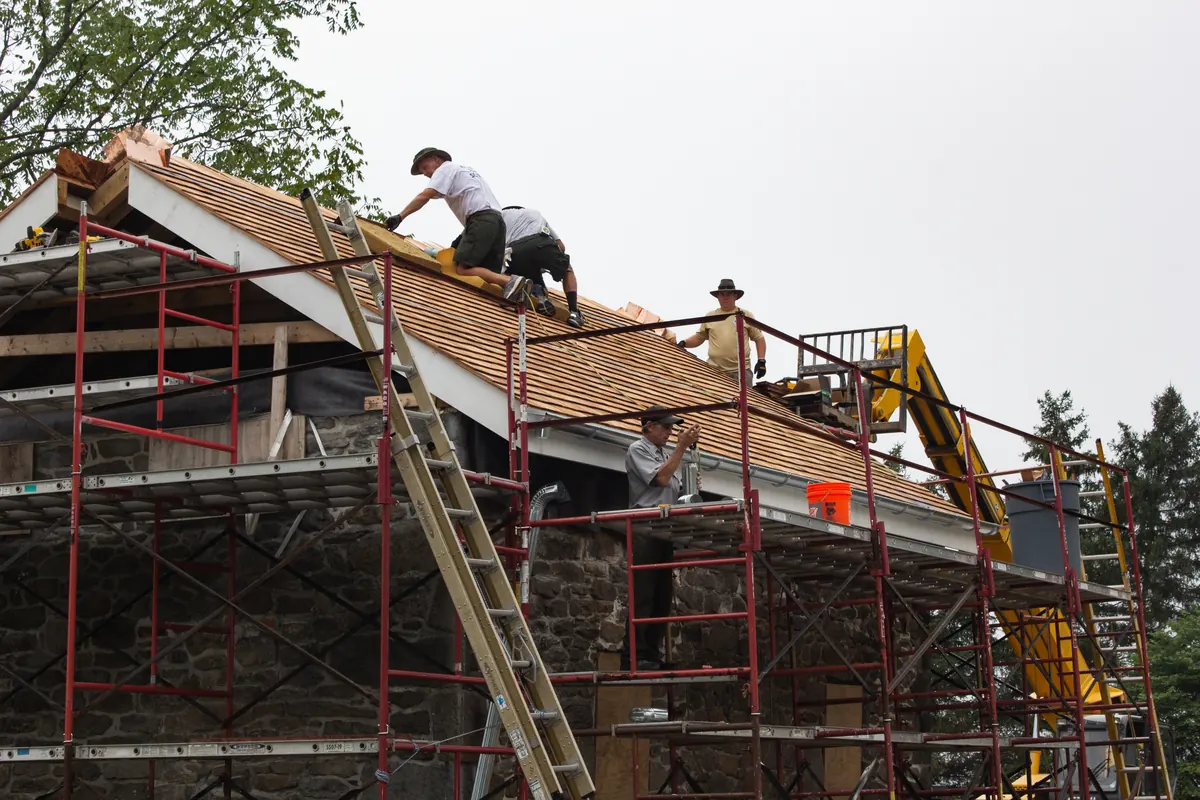
Our roof inspector reads the house from the ground first, then from the ladder, then on the roof, and finishes in the attic.
- Ground. A slow lap of the house, looking for a sagging ridge or a wavy roofline and stained or peeling fascia.
- Ladder. At the eave we check the drip edge, the first course of roofing and any shed granules, and pick the safest route up.
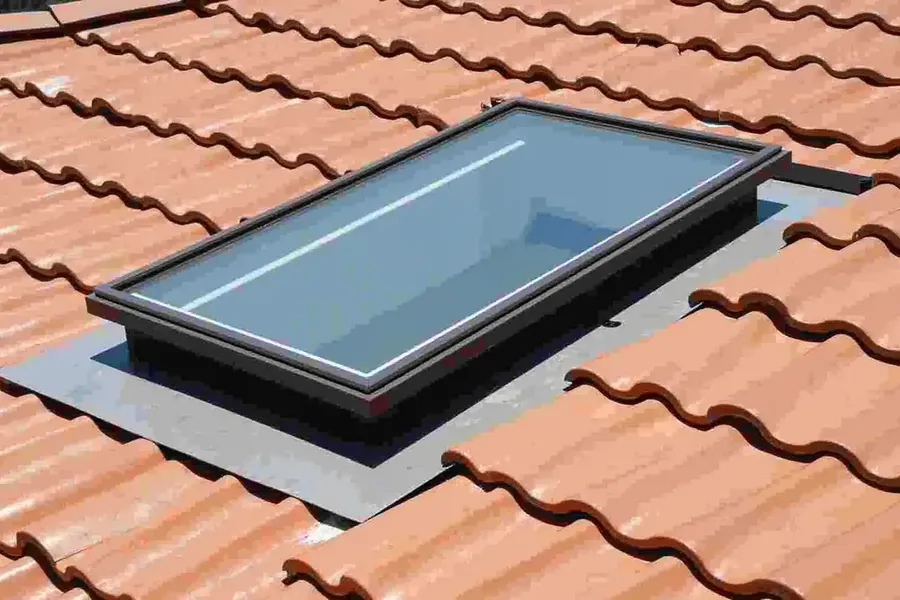
- Roof. A visual inspection on foot over every walkable slope: the field of the roof, valleys, ridge and hips, flashing at walls and chimneys, pipe collars, vents and skylights. A slope too steep or too brittle to walk is read from the ladder with a camera.
- Attic inspection. With a flashlight from the hatch: water stains on the deck, daylight at nail lines, damp insulation, mold on the boards, and a ventilation check that the soffit vents and the roof vents are both open.
- Photographs. Each finding is photographed in place, as it is found.
We also measure the pitch, written as inches of rise per 12 inches of run, because it decides which slopes are walked and which are read from the edge. Every finding goes into the report, and you pick which repairs you want quoted. Nothing is fixed during the inspection itself: you decide afterward.
Roof inspection timing: twice a year, per NRCA
Book at least two roof inspections a year, spring and fall by preference, and one after severe weather.
The National Roofing Contractors Association (NRCA) in *Professional Roofing* advises that interval; NRCA is the national trade body for roofing contractors. If you book only one, we recommend the fall: Riverside’s rain comes mostly in winter and its summers are dry (NOAA NCEI 1991-2020 seasonal normals), and a fall check leaves time to make repairs in the dry rather than in a storm. The spring visit shows what the rain did.
Add a visit outside that schedule when:
- a windy night leaves pieces of shingle or tile in the yard or on the driveway;
- another trade has been up on your roof, such as a solar, antenna or air conditioning crew;
- a branch has come down on the house, or a tree over it has been cut back;
- a mark appears on a ceiling or runs down an inside wall.
A check in October finds a split pipe collar before the January rain reaches the ceiling.
Victoria roof inspection pricing: size, pitch and access
A Victoria roof inspection charge is confirmed when you book, once we know the roof’s size, pitch and access.
Here is what moves the charge:
- Roof size. More roof means more slopes to cover, more flashing to read and more photos to file. A detached garage or a large patio cover has its own roof.
- Pitch and complexity. A steep roof, a second story, dormers, valleys and skylights all take longer to cover safely.
- Access. Steps up from the curb, a sloping side yard or a locked gate change how long the ladder takes to set. Tell us when you call.
Any repair comes as a written estimate before any work starts, and you decide whether to go ahead. For a rough idea of repair prices first, try our roof repair cost estimator for Riverside.

Roof faults a roof inspection turns up early
The faults we catch are the small openings water uses first: split pipe collars, loose wall flashing, tiles out of line and wind-lifted tabs.
What each one does if it is left:
- Pipe collars. The rubber boot around a vent pipe cracks in the sun, and rain runs down the pipe into the attic.
- Wall and chimney flashing. The metal pulls away from the wall, and water tracks in behind it.
- Wind damage. Lifted or missing shingles, or tiles knocked out of line, leave the underlayment open to rain.
- Surface wear. Bare, cracked shingles on the sunniest slopes, or tile gone brittle and chipped.
- Valleys. Leaves and grit dam water on the roof and back it up under the covering.
- Decking. Soft spots underfoot or a dip in the roofline mean wet boards underneath.
- Ventilation. A stuffy attic cooks the roof from below and holds the damp that mold feeds on.
Each one goes on the report with the repair it needs. A repair takes a day or less, depending on the work. Warranty terms depend on the work, and we write them into your quote.
Selling, and asked for a roof certification instead of a report? We offer certifications too; certification terms are told at booking, and roof certification in Riverside explains what one involves.
Roof inspection near Victoria Avenue
Victoria is a City of Riverside neighborhood south of the Tequesquite Arroyo, and we inspect house roofs anywhere inside it.
The City of Riverside’s Victoria neighborhood page says the Tequesquite Arroyo separates Victoria from Eastside.
The City calls Victoria “an old and historic neighborhood” that was first part of the Arlington Heights subdivision. Per the same City page, all of it has been inside Riverside since the city’s founding except the easternmost portion, annexed in 1960 and 1961.
The ground shapes every visit. According to the City’s description of Victoria, the streets “flow with the land, following the natural contours”, and house elevations vary along them. For an inspection that means a ladder plan for each house: where it can stand level, and which slopes are within reach from there.
The City’s Victoria page lists Victoria Avenue as a City Landmark, with a divided design that mirrors Magnolia Avenue; it runs through the north part of the neighborhood and forms the eastern edge of the south part.
We also offer roof inspection in Eastside, north across the arroyo, roof inspection in Arlington Heights and roof inspection in Hawarden Hills.
Victoria roof inspection questions
A roofer’s inspection reads the roof, the attic and every joint between them, with photographs you keep.
What does a roof inspection consist of?
A roof inspection consists of a walk around the house, a check from the ladder, a walk over each safe slope, an attic check and a photo report.
On a Victoria lot the walk around the house also settles where the ladder goes, because the grade can change from one side of the house to the other. The method section above has each step.
Can a home inspector inspect a roof?
Yes, a home inspector can look over a roof as one line in a whole-house report; our roofer spends the full visit on the roof and attic.
If a home inspector has flagged your roof, our report answers each flag with a photo and, where work is needed, the repair it calls for.
Does a 20 year old roof need to be replaced?
Not because of its age; a 20-year-old roof needs replacing when the inspection finds the covering worn through on every slope, or the deck soft.
If the report shows faults in patches, roof repair in Victoria works through them. If the whole roof is spent, roof replacement in Victoria starts from the same photos. Either way the report lets you compare the cost of a repair with a new roof before you decide.
Book a Victoria roof inspection by phone
Call (951) 433-4486, give our roofing team your Victoria address and which side of Victoria Avenue it is on, and we set a time.
Useful to have on hand: whether the house sits above or below the street, which gate we should use, where the attic hatch is (garage ceiling, hallway or closet), any dogs in the yard, and the dates of past leaks or repairs. Every minute saved finding the way up is a minute spent on the roof.
Before any roofer climbs onto your house, look them up on the Contractors State License Board (CSLB) Check a License page.
For homes elsewhere in the city, start from our Riverside roof inspection page, or find your neighborhood on the areas we serve.