Roof Inspection in Grand, Riverside, CA
Roof inspection in Grand, Riverside, CA: one to two hours on site, a written photo report within two days, depending on the work.
Our roofing team answers 24 hours a day, 7 days a week; emergency calls answered around the clock on (951) 433-4486. Book before the winter rains, while a split boot or a lifted edge can still be fixed in dry weather. Any charge is confirmed when you book.
Residential roof inspection in Grand, Riverside
We inspect house roofs all over Grand, and the one who climbs up is a roofer who repairs roofs for a living.
Your roof inspector comes from Riverside Roof Repairs, so every finding you read comes with what fixing it would involve. We cover the main roof, the garage, any patio cover and any low-slope section over an addition.
The best roof inspection is one you can check afterwards. Each fault in your report has a photograph and a place on the roof, and any repair comes on a written estimate, so you decide what happens next. If water is already coming through a ceiling, book roof leak repair in Grand instead of an inspection; tracing a live leak is a different visit.
The roof inspection report: photos and findings
You get a written report with a photograph of every finding, its position on your roof and what we recommend doing about it.
It reaches you within two days of the visit, depending on the work, and it is laid out so you can act on it:
- Summary: the covering on each slope, how many roof levels there are, and the overall condition in one sentence.
- Repair now: anything letting water in or close to it, each with its photo and the slope or detail it sits on.
- Fix before the wet months: worn items unlikely to last another winter.
- Watch: parts that are aging but sound, noted so the next inspection can compare.
- Attic notes: stains, damp insulation, daylight through the deck, and how well the space breathes.
The report stays a plain record of the roof. Each photo points to a spot you can find on your own house, and the report is yours to keep whatever you decide. The same report format is used for every Riverside roof inspection we carry out.
Shingle, tile and low-slope roofs on one roof inspection
One visit covers every roofing material on your house, and the report names each one before it lists what is wrong with it.
Every material wears in its own way, so our checks change as we move across the roof:
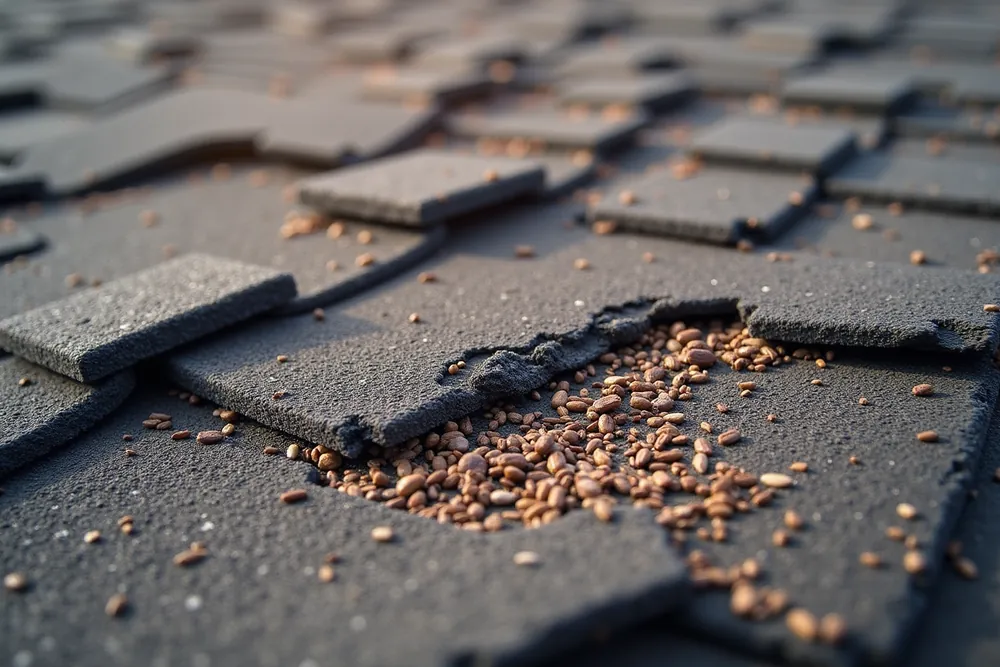
- Asphalt shingles: bald patches where weathering has washed the granules off, curled or cupped tabs, cracked shingles, missing shingles, and seal strips the wind has broken.
- Clay tile and concrete tile: broken corners, cracked tiles, pieces slid down the course, and gaps that leave the underlayment open to sun and rain. We step only where tile will take a foot and read the rest from the ladder.
- Metal roofing: screws that have backed out, cracked washers, and corrosion at seams and cut edges.
- Low-slope sections: rolled roofing, modified bitumen or a coated surface over a porch or addition, checked for open laps, blisters, cracking and standing water.
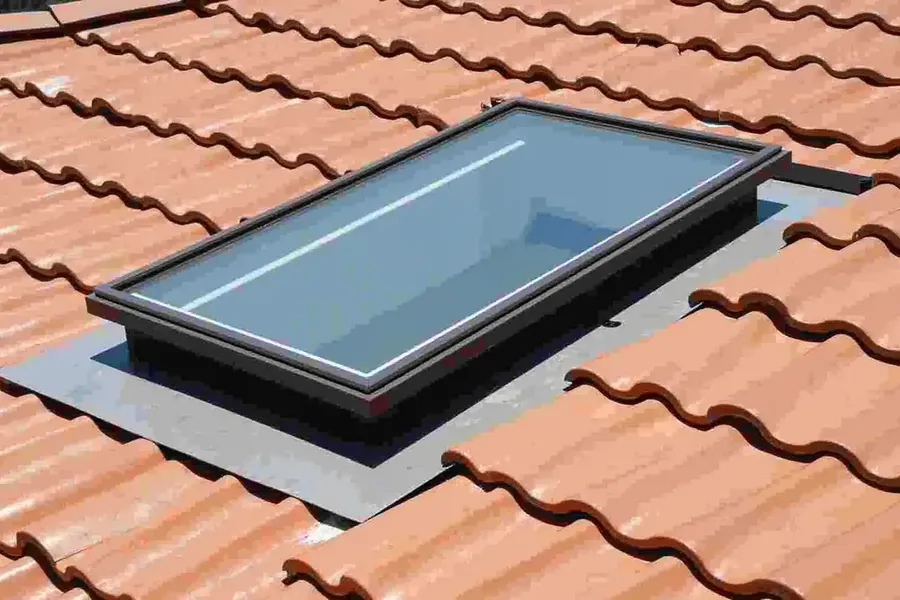
- Flashing: the galvanized steel or aluminum at walls, chimneys, skylights and valleys, checked on every material, since that metal is where many roofs first let water through.
Your repair estimate is written for the material we actually found, since a tile fix and a shingle fix cost different amounts. Tile that needs more than a few pieces goes to tile roof repair in Grand, and a worn porch membrane to flat roof repair in Grand.

Our roof inspection method: ground, ladder, attic, photos
We work in a fixed order: ground, ladder, the roof surface where it is safe, the attic, and photographs all the way through.
- Ground. We walk around the house first, looking at the line of the ridge for any sag, at missing or lifted pieces on each slope, and at water marks on the walls below the eaves.
- Ladder. On an uneven lot the ladder goes on firm, level footing and is tied off where it needs to be. From the eave we check the drip edge and the first course.
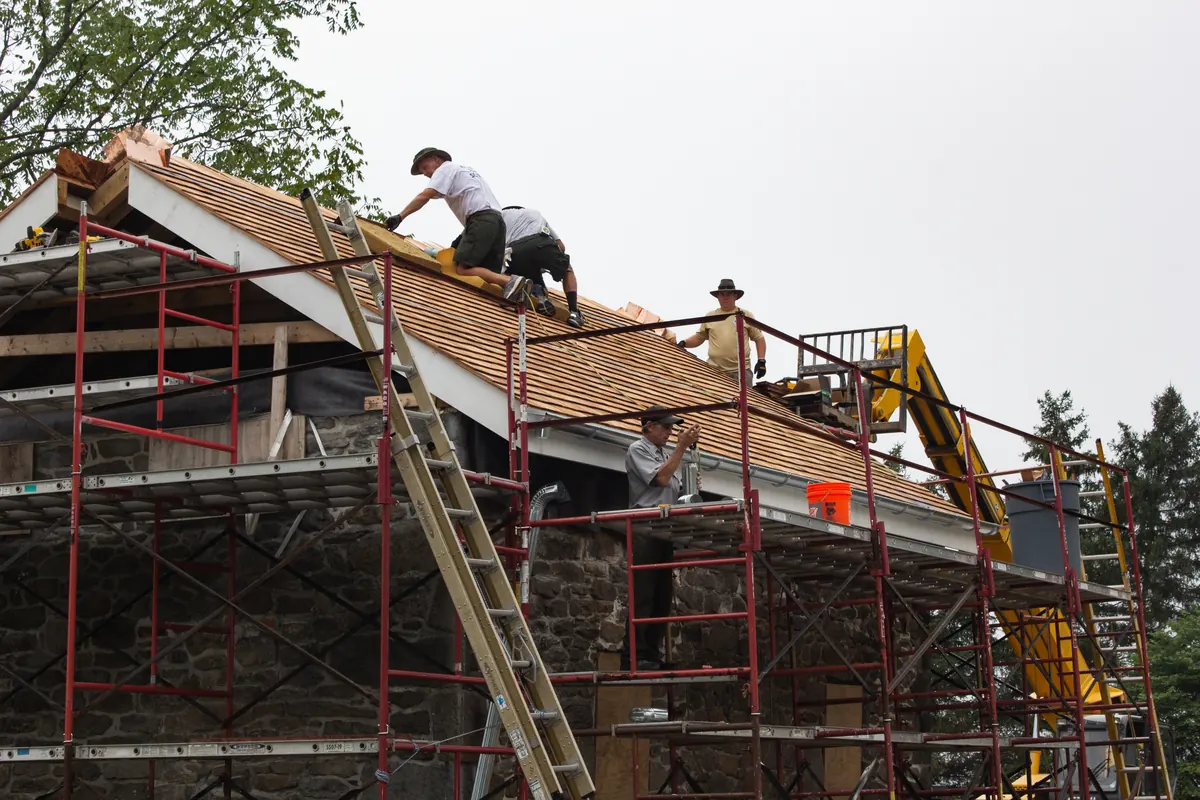
- Roof surface. A visual inspection of every slope we can walk without harm: covering, flashing, vent pipes and their boots, skylight curbs, valleys and ridge. Fragile or steep areas are read from the ladder.
- Attic. With a light, the attic inspection follows the underside of the deck for water stains and soft spots, the nail points for rust and daylight, and the insulation for damp; a ventilation check at the soffit and roof vents closes it.
- Photos. Each finding is photographed where it is, before anything is touched, so the report shows exactly what we saw.
A home inspector covers the roof as one item in a whole-house report, while our roof inspection stays on the roof and in the attic for the whole visit. If a home inspection flagged your roof, we recommend a roofer’s look before you decide on a repair or a new roof, rather than pricing work off a general note.
How often to book a roof inspection, by NRCA
**Book one at least twice a year, preferably spring and fall, and again after severe weather, as NRCA in *Professional Roofing* recommends.**
The National Roofing Contractors Association (NRCA) is the roofing trade’s national body. Of its two visits, the fall one counts for most here: Riverside’s rain comes mostly in winter after a dry summer (NOAA NCEI 1991-2020 seasonal normals), so a fault found in the fall can be repaired before the first storm tests it.
Add a visit after a windstorm, after a tree limb has come down on the roof, after another trade has worked up there (solar, a satellite dish, a new vent), or as soon as a stain appears on a ceiling. The fall visit is also when we see what has built up in the valleys before it starts holding water.
Grand roof inspection price: size, pitch and access
For your Grand roof inspection, any charge is confirmed when you book; the roof’s size, its pitch and complexity, and access set it.
For that you get one to two hours on site and a written photo report within two days, depending on the work. The three drivers, one by one:
- Roof size: more square footage means more slopes to walk, more flashing to follow and more photographs to sort.
- Pitch and complexity: steep slopes, two or three roof levels, hips, valleys, dormers and skylights all take longer to cover safely.
- Access: a lot set above or below the street, a climbing driveway, a tight side yard or planting right up to the walls adds setup time, and so does an attic hatch at the back of a closet.
For a rough idea of what a repair might come to, try our roof repair cost estimator for Riverside.
Every visit we book includes a roofer on the roof, a check of the attic and a photograph of each finding.
Roof faults a roof inspection catches before they leak
The faults we catch early are split vent boots, loose flashing, slipped tiles, worn or lifted shingles and blocked valleys.
Each goes in the report with what it does if it is left:
- Vent pipe boots: the rubber collar cracks in the sun, and water follows the pipe down into the attic.
- Wall and chimney flashing: once it pulls away from stucco or brick, rain runs in behind it.
- Missing or loose roofing: a lost shingle or a tile out of its row leaves the underlayment exposed.
- Worn surfaces: shingles shedding granules, or tile turned brittle, on the slopes that face the sun longest.
- Valleys: debris blocks the drainage, so water backs up under the roofing and finds the deck.
- The deck: a soft spot underfoot or a dip in the roofline points to wet or failing sheathing.
- Attic airflow: blocked vents trap heat and moisture under the deck.
A small repair takes a day or less, depending on the work, and roof repair in Grand works through the report’s list. Warranty terms depend on the work, and we write them into your quote. When the faults add up to a worn-out roof, the report says so with photos, and roof replacement in Grand takes it from there.
Selling the house? A buyer may ask for a roof certification rather than a report. We offer it, and certification terms are told at booking: see roof certification in Riverside.
Roof inspection near the Tequesquite Arroyo
We inspect house roofs across Grand, whose central feature, the City says, is the Tequesquite Arroyo, the largest arroyo in Riverside.
The City of Riverside’s Grand neighborhood page describes hills in the east, flat land around the arroyo and a steep slope down to the Santa Ana River basin in the north, with the blocks laid out in irregular shapes to fit. Roughly half of Grand’s land is developed, the page adds, with the rest kept as open space.
Where your house sits changes what we look at first:
- The hills on the east side: where part of a roof cannot be seen from the street, we read those slopes from the ladder.
- Around the arroyo: where branches hang over a house, we look for leaves packed in the valleys and a worn patch where a limb rubs.
“Many homes in this neighborhood were built prior to 1950, with development peaking in the decade following World War II,” the City’s Grand page says.
Grand lay inside Riverside’s original 39.4 square miles, and annexations in 1955 and 1969 carried its northwest line to the edge of the Santa Ana River, as the City of Riverside’s neighborhood history records.
Grand’s housing runs from hillside homes with river views to heavily landscaped streets, and the Santa Ana River Trail follows its northern edge below those hillside homes, per the City’s Grand profile.
When you call us, tell us the nearest cross street and whether your lot slopes toward the river.
We also inspect roofs in Downtown and Eastside, and every neighborhood we cover is on our areas page.
Roof inspection FAQs for Grand homes
The visit is a ground, ladder, roof and attic check, and any charge is confirmed when you book.
How long does a roof inspection usually take?
One to two hours on site, a written photo report within two days, depending on the work.
On a hillside lot part of that time goes on setting the ladder safely, and a large roof with several levels sits at the long end of the window. Any charge for your visit is confirmed when you book.
How do roofers inspect roofs?
We inspect a roof by walking it where it is safe, reading the rest from a ladder, checking the attic underneath and photographing each fault.
The method section above sets out each stage in the order we do it.
What will fail a roof inspection?
Water getting in, soft or rotted decking, and missing or broken roofing or flashing are what fail a roof inspection.
Worn but sound surfaces, small cracks and packed valleys come out as repairs to make, not as a failed roof; the faults section lists them.
Book your Grand roof inspection with one call
Call (951) 433-4486 and our roofing team books a time to inspect your Grand roof; tell us your street and what you have noticed.
Mention any past leaks, marks on the ceilings and where the attic hatch is, and tell us if the drive is steep or the side gate stays locked. If a storm has already opened the roof, ask for emergency roof repair in Grand instead.
Before you open the side gate for any roofer, confirm their license on the Contractors State License Board’s (CSLB) Check a License search, by business name or license number.
Somewhere else in the city? Our page on roof inspections across Riverside covers the rest.