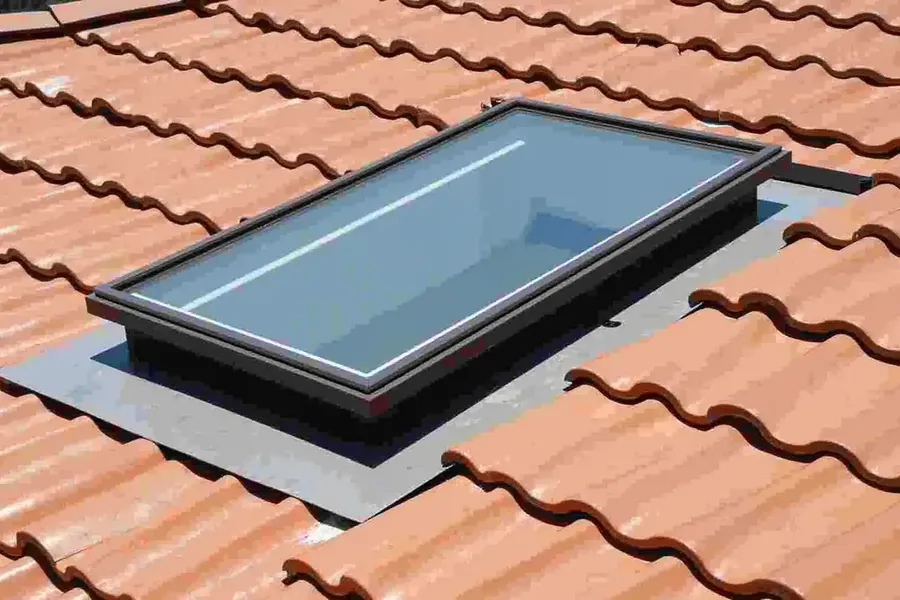
Roof Inspection in Downtown, Riverside, CA
Our roof inspection in Downtown, Riverside, CA means one to two hours on site, a written photo report within two days, depending on the work.
Our roofing team answers 24 hours a day, 7 days a week; emergency calls answered around the clock on (951) 433-4486. A loose flashing or a split joint usually shows itself on a ceiling once the winter rain starts, so a roofer’s look before the first storm saves you the stain. Any charge is confirmed when you book.
Roof inspection in Downtown Riverside
We inspect the roofs of Downtown houses: the main roof, the garage, the porch and any rear addition, every slope written up.
The roofer who climbs your ladder repairs roofs for a living, because Riverside Roof Repairs is a roofing contractor. One lot can carry a house, a later addition and a detached garage, each roofed at a different time. We take in all of them on the one visit, and anything that needs work comes back as a written estimate, so you decide what gets fixed and when. If water is already coming through a ceiling, start with roof leak repair in Downtown so we trace that first.
Where we inspect in Downtown, and what we look at first:
- The Downtown Specific Plan’s Residential District: one of the land use districts in the City’s Downtown Specific Plan; here we start where a roof meets a wall, a chimney or a porch roof, the joins where older flashing lets go first.
- Streets below Mount Rubidoux: a park of 161 acres that the City lists among Downtown’s parks; where a house sits under trees we check the valleys for leaves and look for rot along the fascia.
Roof inspection report: photos and findings
Your report lists each finding with its photograph, its spot on the roof and a plain verdict: repair now, watch, or leave it.
The written report reaches you within two days of the visit, depending on the work, and it follows the order we inspected in:
- The roof as it stands: what covers each section, how many slopes there are, any flat or low-slope area, and whether a second covering sits over the first.
- The findings, one to a line, each photographed and placed: the back porch roof, the valley beside the chimney, the north slope over a bedroom.
- The attic: the underside of the decking, any marks from past water, and how air moves from the soffits to the roof vents.
- A written repair estimate for anything that needs work.
The report stays with you, and every finding can be found again from its photo and where it sits. Our Riverside roof inspection service writes the same kind of report for every house we inspect.
Downtown roof inspection: what it covers
On a Downtown house we inspect every roof on the lot, every layer visible at the edge, and every past patch.
What the inspection reads:
- Past patches: roof cement smeared over a flashing, a shingle or tile of a different color, a newer section butted against an older one. Each marks a place water has found before.
- Layers: at the drip edge we look for a second covering laid over the first, which adds weight and hides the deck from view.
- Chimneys and parapets: brick and block need a sound cap or coping and flashing set into the joints; open mortar lets water run behind the metal.
- Additions: where a later room or porch roof meets the original house, the join is often the weakest line on the whole roof.
- The attic of an older frame: decking, rafters, old water marks and whether the space can breathe at all.
All of that is part of the one visit, and any charge is confirmed when you book. On the day, we will tell you which old patches are worth keeping and which belong on the repair estimate.
Shingle, tile and low-slope roofs on one roof inspection
One visit inspects every covering on your house: asphalt shingle, clay or concrete tile, metal, wood shake, or a flat membrane over a porch.
The report names your covering at the top, and each one has its own way of failing:
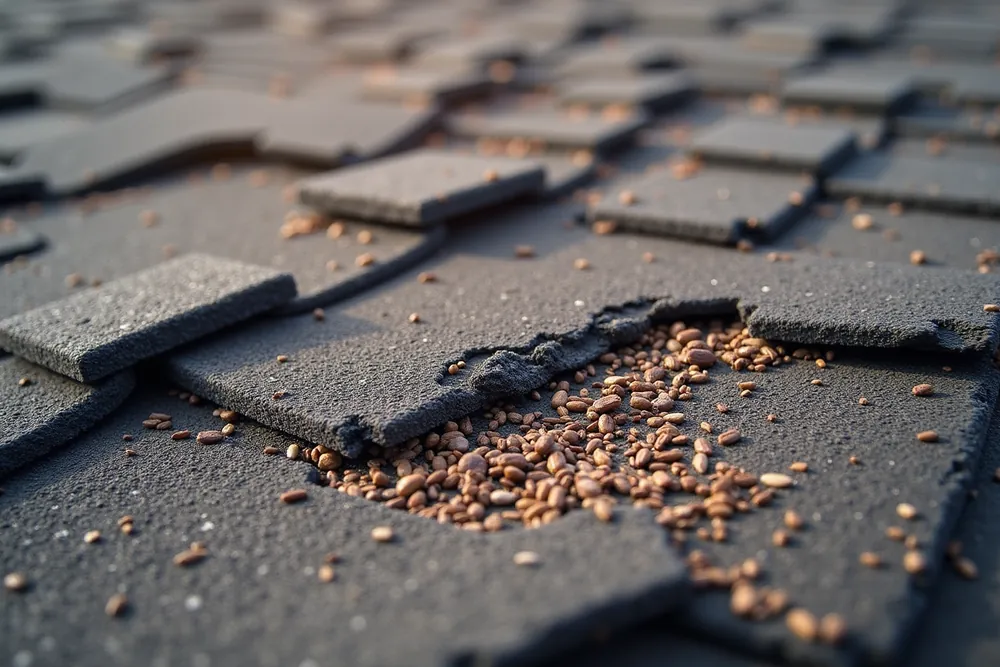
- Asphalt shingles: granules washing off from weathering, curled or cupped edges, cracked shingles and creased tabs, lifted shingles and broken seals after wind, and nails working up through the surface.
- Clay tile or concrete tile: broken, cracked, slipped and missing pieces, open mortar at the ridge and hips, and bare underlayment where a tile has moved. The underlayment is the water barrier; the tile shields it.
- Metal roofing: fasteners backing out, corrosion at cut edges and laps, and dried-out sealant along the trim and ridge.
- Wood shake: splits, cupping, and rot starting at the butt ends.
- Flat or low-slope membrane: opened seams, blisters, ponding stains, cracked coating and a clogged scupper.
That covering decides the repair too. Several broken tiles go to tile roof repair in Downtown; a split membrane over a porch goes to Downtown flat roof repair.

Our roof inspection method: ground, ladder, attic, photos
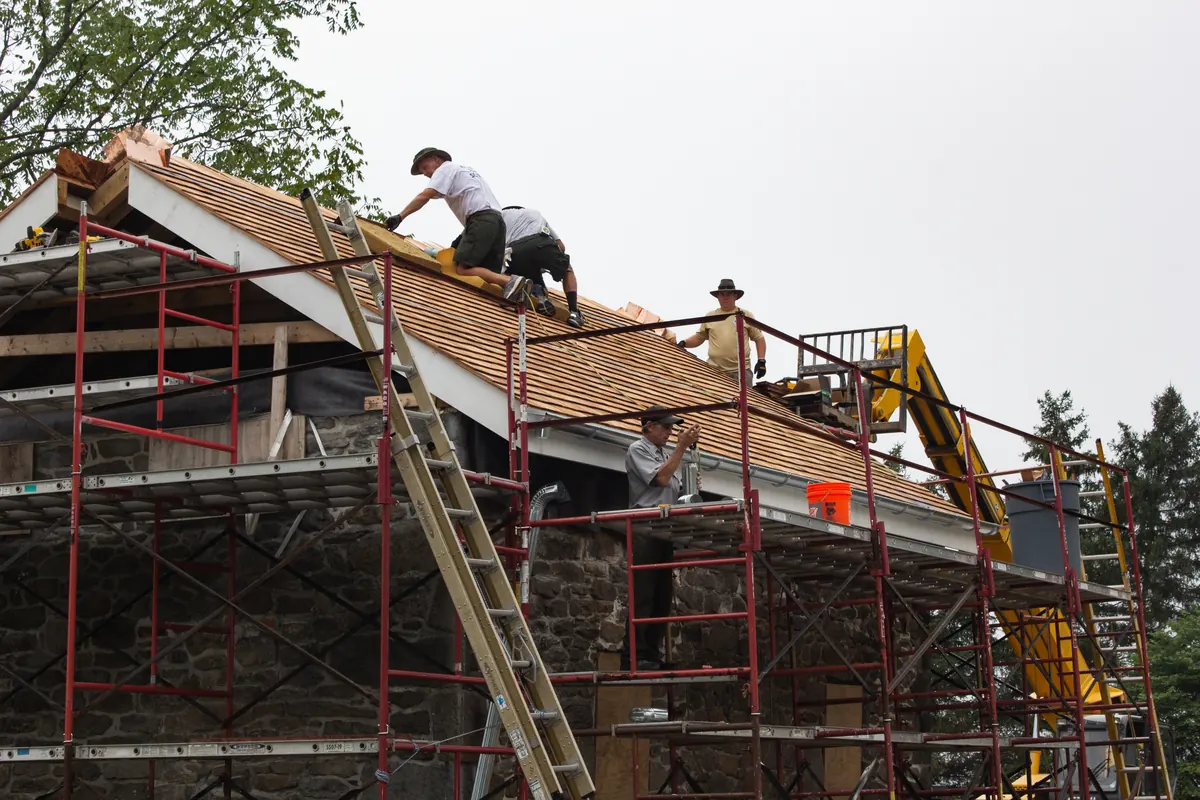
We work from the ground up: a walk around the house, then the ladder, then the roof surface, then the attic, photographing as we go.
- Ground. A slow lap of the house: the roofline for sag, the fascia and soffit boards, and water marks on the walls under the eaves.
- Ladder. It goes up on firm footing with its rails standing well above the eave, so the step onto the roof is steady. From there we read the drip edge and the first course.
- Roof. A visual inspection on foot across the slopes that will take our weight, and from the ladder for the rest: covering, flashing, pipe boots, vents, skylights, chimneys, valleys and the ridge.
- Attic. Our attic inspection follows the decking with a light from the eaves to the ridge for water stains, soft wood, rusted nail points and damp insulation, then a ventilation check: air in at the soffits, out at the top.
- Photos. Everything we note is photographed where we find it, before anything is touched.
A home inspector reports on the whole house and gives the roof one section of it. We spend the whole visit on the roof and the attic under it, rather than one page of a longer report. If your home inspection flagged the roof, we recommend a roofer’s look before you agree to anyone’s quote, and the contractor you pick should be able to show you each fault.
How often to book a roof inspection, by NRCA
**Book at least two roof inspections a year, spring and fall, plus one after severe weather, as NRCA in *Professional Roofing* advises.**
The National Roofing Contractors Association (NRCA) is the body that speaks for roofing contractors across the country.
Of the two visits, the fall one earns its place in Riverside. Riverside’s rain comes mostly in winter, after dry summers (NOAA NCEI 1991-2020 seasonal normals) that dry out sealant and open old joints, and a fault you know about in October can be fixed while the roof is still dry. The spring visit shows you what the wet months did.
Between the two, a windstorm, a new piece of equipment bolted to the roof, or a brown stain on a ceiling is reason enough for another look.
Roof inspection cost: roof size, pitch and access
Any charge is confirmed when you book; on a Downtown lot, parked cars, a narrow side yard or a tall wall add time.
For the visit you get one to two hours on site, a written photo report within two days, depending on the work. The three drivers:
- Roof size: more square footage means more slopes to walk, more flashing to check and more photographs to write up.
- Pitch and complexity: steep slopes, dormers, several roof levels, chimneys and skylights all take longer to cover safely.
- Access: a narrow side yard, cars parked tight along the curb, a garage reached from the back, a tall two-story wall or an attic hatch inside a closet.
For a rough idea of a repair price before we come out, use our roof repair cost estimator for Riverside. If you are weighing inspection offers against each other, set them side by side on what you hold at the end: who went up on the roof, whether anyone opened the attic, and how many photographs back the findings.
Roof faults a roof inspection catches before they leak
Cracked pipe boots, loose chimney and wall flashing, broken or slipped roofing and blocked valleys are what we catch before a ceiling stains.
What each one does to your house if it is left:
- Pipe boots: the rubber collar around a vent pipe hardens in the sun and splits, and water runs down the pipe into the attic.
- Chimney and wall flashing: metal stepped into brick or tucked under stucco pulls away or rusts through, and rain gets in behind it.
- Broken or slipped roofing: a cracked tile, missing shingles or a lifted ridge piece leaves the underlayment open to the weather.
- Valleys: leaves and grit dam the water at the lowest line of the roof and push it back under the courses.
- Soft decking: a spongy step on the roof, or water stains seen from the attic, means water has been at the wood.
- Poor attic ventilation: trapped heat ages the roof from underneath, and trapped damp feeds mold.
Each one goes into the report. Repairs take a day or less, depending on the work. Warranty terms depend on the work, and we write them into your quote. When you are ready, roof repair in Downtown works straight from the report’s list.
When the house is going on the market, the paper a buyer asks for may be a roof certification rather than a report. We do those as well, certification terms are told at booking, and our roof certification page for Riverside explains the rest.
Roof inspection near City Hall
We inspect houses of every style in the streets around City Hall, and the report names the roof you actually have.
The City of Riverside’s Downtown neighborhood page lists Spanish Colonial Revival, Mission Revival, California Bungalow and Beaux Arts among the styles here, alongside modern buildings. Where a Revival-style house has a parapet, we check its coping and the flashing behind it; where a bungalow has wide eaves and exposed rafter tails, we check the tails and the edge boards for rot.
Downtown’s streets follow a grid that, in the words of the City’s page on the neighborhood, was “originally laid out in 1870”, and the City calls it walkable. On a street of parked cars, reaching the eaves is the access part of the visit, and any charge is confirmed when you book.
The same City Downtown profile counts more than a dozen sites on the National Register of Historic Places here and more than thirty City-designated landmarks. If your house is one of them, mention it when you book.
Downtown is the civic center of the city, “the seat of both City and County government” as the City of Riverside puts it, with City Hall and the Main Library inside the neighborhood.
Next door to Downtown’s grid we also cover roof inspection in Wood Streets, Eastside roof inspections and roof inspection in Northside, and our areas page lists every Riverside neighborhood we serve.
Roof inspection FAQs for Downtown homes
A Downtown inspection takes in every roof on the lot, and the report’s photos show what each one needs.
How long does a roof inspection usually take?
One to two hours on site, a written photo report within two days, depending on the work.
On a Downtown lot with a garage or a rear addition, the time on site includes those roofs as well. You do not need to come up with us, but we do need a way into the attic.
Does a 20 year old roof need to be replaced?
Not because it is 20: the covering, the deck under it and how the flashing has held up decide it.
The report sets out the condition with photos. If it points to a new roof, roof replacement in Downtown takes it from there.
How much does a roof inspection normally cost?
Any charge is confirmed when you book, before we arrive; the roof’s size, its pitch and the access are what we ask about.
Repairs found on the day come on a written estimate. The cost section above walks through each of the three.
Book your Downtown roof inspection with one call
One call to (951) 433-4486 books it: our roofing team takes your address, hears what worries you, and gives you a time.
Have three things ready: where the attic hatch is, any leaks or ceiling marks you remember, and whether there is a detached garage or a rear addition with its own roof. If a storm has already opened the roof, emergency roof repair in Downtown is the call to make.
The Contractors State License Board (CSLB) Check a License page will show you whether a roofer is licensed before they climb onto your Downtown house or the garage behind it.
For houses outside the grid, roof inspections across Riverside covers the rest of the city.