Tile Roof Underlayment Replacement in Riverside, CA
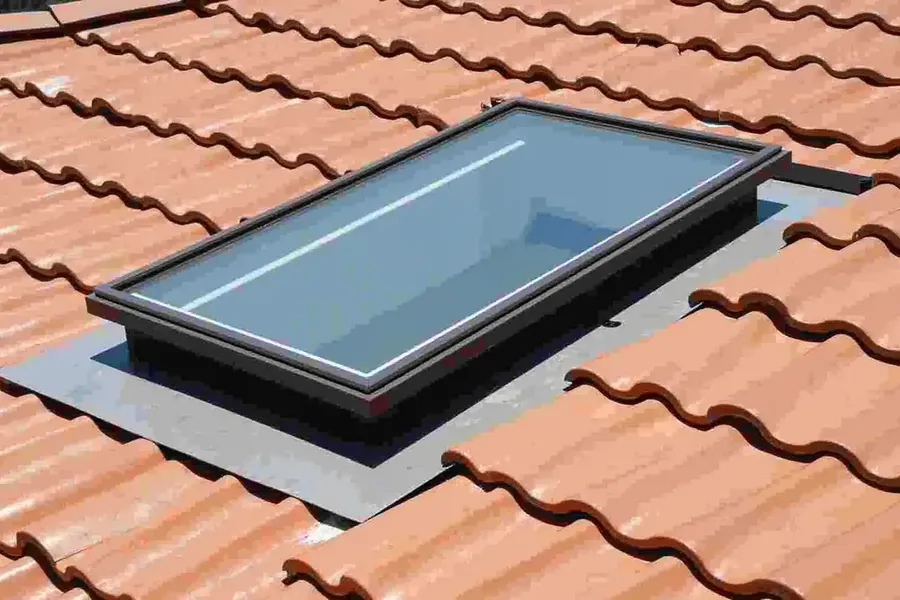
Tile roof underlayment replacement in Riverside, CA: we lift your concrete or clay tiles, replace the underlayment and flashing, and relay the same tiles.
Riverside’s rain comes mostly in winter and its summers are dry: at the Riverside Municipal Airport station, 6.21 of the year’s 9.37 inches of rain fall in December through February (NOAA NCEI 1991-2020 seasonal normals). Worn underlayment under sound tiles is what lets that rain into your attic. Our roofing team answers 24 hours a day, 7 days a week, so call (951) 433-4486 and tell us where the water shows.
Tile roof underlayment replacement services in Riverside, CA
We replace the underlayment under concrete and clay tile roofs on houses across the City of Riverside, and your own tiles go back on. The trade calls the job a lift and relay, a tile reset or a re-felt.
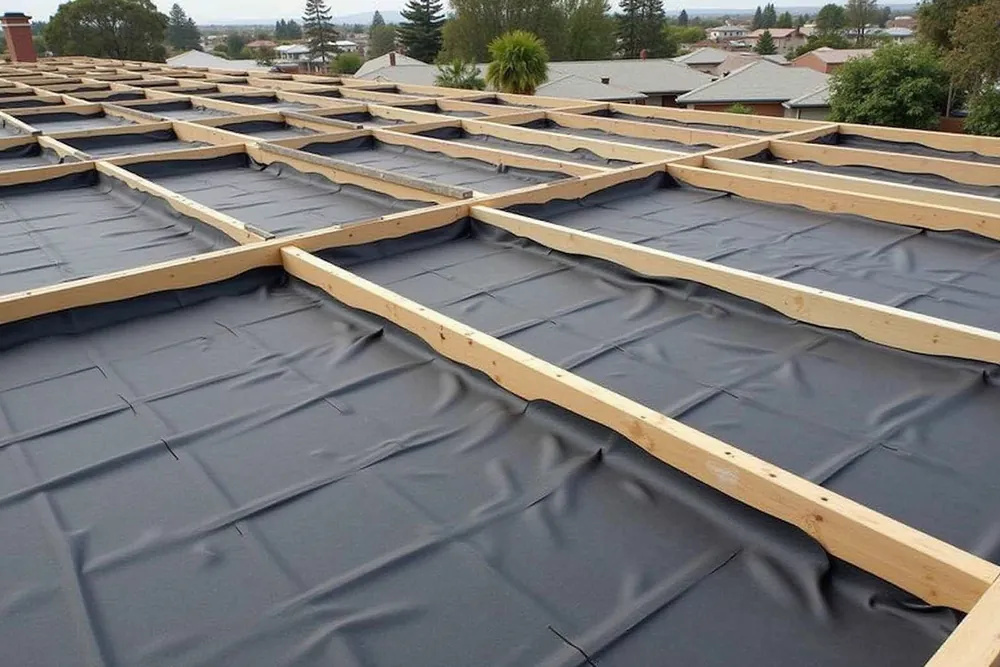
The membrane under your roof tiles is the underlayment. The tiles shed most of the rain; the underlayment catches what blows under them and carries it down to the eave. When it cracks and tears, the water reaches the wood.
A lift and relay takes your tiles off, replaces what lies under them (underlayment, flashing, soft deck and rotted battens) and puts the same tiles back, in the steps set out below. It is the job for a roof whose tiles are sound and whose underlayment is not. When the tiles themselves are breaking up across the slopes, our tile roof repair and replacement service covers a new tile roof. A leak on a part of your house that is not tile goes to our roof leak repair service, and every other roofing job starts at roofing in Riverside.
Signs your tile roof underlayment has failed
Failed underlayment shows as leaks in more than one place, a leak that returns after tile repairs, or ceiling stains that spread after each rain. We confirm it by lifting tiles and reading the underlayment itself, before we put a price on any repair.
What you may see from inside the house:
- a stain on a ceiling or wall under a tiled slope, growing after each storm
- damp or flattened insulation in the attic
- dark, wet decking at the eaves or along a valley, seen from the attic
- daylight around a vent pipe or a chimney
Those are your signal to call us. Leave the roof itself to us: tiles crack underfoot, and a cracked tile adds a second leak to the first.
What we look for once a tile is up:
- Brittle felt that cracks when we fold back a corner, or crumbles at the laps
- Tears and holes at nail holes, along the laps and under tiles someone has stood on
- Bare deck where the underlayment has worn through and the wood shows
- Water tracks, the dark lines where water has run under the tile
- Rusted or lifted flashing in the valleys and along walls
- Soft sheathing at the eaves and valleys, where water has sat
We photograph what we find under every tile we lift, and the photographs go with your estimate. Tell us where the water shows inside and we start there.
Is tile roof underlayment replacement worth it?
Yes, when your tiles are sound and the underlayment under them has failed across the roof. A lift and relay stops the water where it gets past the tile, and you keep the tile you already own.
Why it pays on the right roof:
- The leak stops at its source. New tiles laid on old underlayment leave the leak where it was. New underlayment under your old tiles closes it.
- You keep your tile. Sound concrete and clay tile goes back on, so your house keeps its look and you are not buying new tile.
- Everything under the tiles is new. Underlayment, flashing and any soft deck are replaced while the tiles are off.
When it is not worth it. If your tiles break as fast as we lift them, relaying them on new underlayment gives you a roof of broken tiles. Then we quote a new tile roof instead, and show you the tiles that told us so.
Should you replace 22-year-old underlayment? Only if it has failed, which we read under the lifted tiles.
Told you need a whole new tile roof? Ask to see the tiles. If they are sound, the underlayment can be replaced under them.
Best underlayment for a tile roof: felt or synthetic
The best underlayment for your tile roof is one the 2025 California Residential Code (CRC) lists for clay and concrete tile.
Three kinds go under tile, and each qualifies by the standard printed on its label:
- Felt: asphalt-saturated paper in rolls, the traditional underlayment under tile, nailed down in overlapping courses.
- Synthetic: a woven or spun polymer sheet, lighter per roll than felt and laid the same way, shingle fashion from the eave up.
- Self-adhered: a sticky-backed sheet of polymer modified bitumen that bonds to the deck. It seals around the nails that pass through it, which is why roofers lay it in valleys and at low slopes.
Is synthetic underlayment under concrete tiles a mistake? Not when its label carries a standard the code lists for tile and it goes down to the code for your slope. The code never uses the word “synthetic”: a synthetic sheet qualifies the same way felt does, and the choice between them comes down to your roof’s slope and the tile maker’s installation instructions.
What goes under tile on a repair? The same listed underlayment, lapped into the sound underlayment around it, as the one-section relay below describes. We tell you which one we would use on your roof and why, so you can set it beside any other estimate you get.
Tile roof underlayment code in California
The 2025 CRC requires labeled underlayment under clay and concrete tile, in two layers on low slopes and one at 4 in 12 or steeper.
Section R905.1.1 of the 2025 California Residential Code, Chapter 9, roof assemblies says underlayment “shall bear a label indicating compliance to the standard designation”. For clay and concrete tile, Table R905.1.1(1) lists:
- ASTM D226 Type II
- ASTM D1970
- ASTM D2626
- ASTM D6380 Class M
- ASTM D8257
How it goes down, from section R905.3.3:
- Slopes from 2½ in 12 up to 4 in 12: two layers.
- Slopes of 4 in 12 or more: one layer, “applied shingle fashion, parallel to and starting from the eave and lapped 2 inches. End laps shall be 4 inches and shall be offset by 6 feet.”
- The self-adhering option: “A single layer of self-adhering polymer modified bitumen underlayment complying with ASTM D1970”, installed to the makers’ instructions.
Your estimate names the underlayment, its standard and the number of layers for your slope. Ask any roofing contractor who prices your relay to put the same in writing.
Tile lift and relay, step by step
The job takes several days, depending on the work, done one slope at a time so the rest of your roof stays covered.
- Inspect and estimate. We lift tiles on each slope, look at the deck from the attic, count broken tiles and give you a written estimate.
- Lift and stack. We lift the tiles, set the cracked ones aside, and stack the sound ones on the roof, spread so the weight never sits in one place.
- Strip. The old underlayment, its nails and the old flashing come off down to the deck.
- Repair the deck. We replace soft or rotted sheathing and refasten loose boards.
- Lay the underlayment in the layers your roof’s slope calls for, as set out above.
- Flash. New metal at valleys, walls, chimneys, skylights and pipes.
- Battens. On a batten roof, rotted or split battens are replaced before any tile goes back.
- Relay. Any tear in the new underlayment is patched first. Each tile goes back in its course and locks into its neighbors, with replacement tiles for broken ones, the closest we can find for your profile, fastened to the code and the tile maker’s instructions.
- Hips and ridges. Re-bedded and fastened.
- Clean up and photograph. We haul the old material away, and you get photographs of the repaired deck and the new underlayment taken before the tiles went back.
We get tile back over each slope as we finish it, so new underlayment never sits open to the weather.
Reusing your roof tiles on new underlayment
Your sound tiles go back on: the 2025 CRC lets existing clay or concrete tile be reinstalled, never a damaged, cracked or broken one.
Section R908.5 of the 2025 California Residential Code says: “Existing slate, clay or cement tile shall be permitted for reinstallation, except that damaged, cracked or broken slate or tile shall not be reinstalled.” The same section says existing flashings, edgings, outlets, vents or similar devices “shall be replaced where rusted, damaged or deteriorated.”
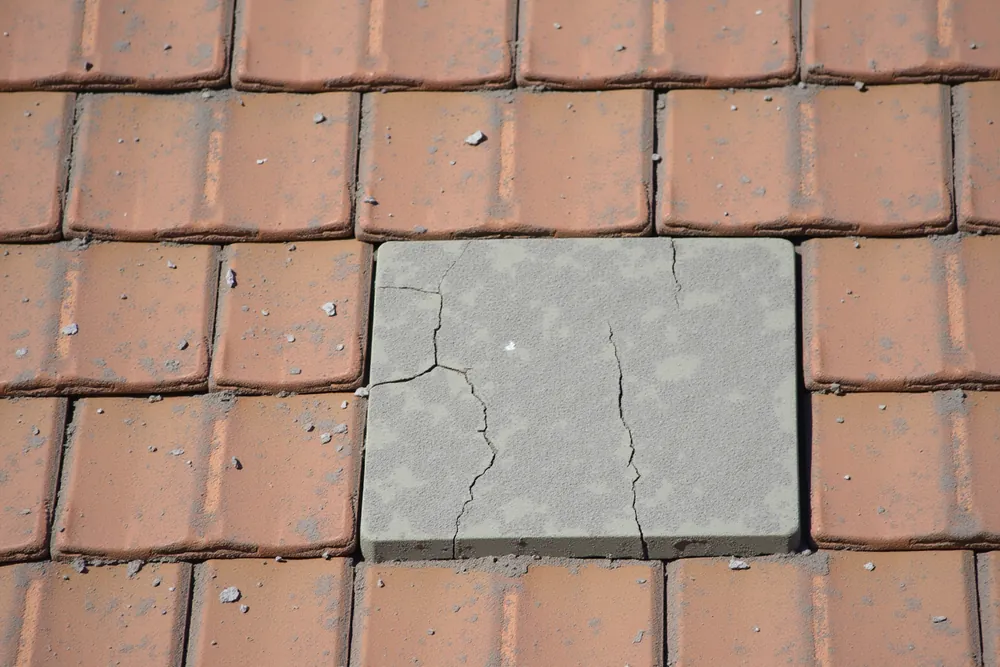
Some tiles crack as they come up, however carefully we lift them.
We set every cracked tile aside where you can see it and put the closest replacement we can find in its place, new or salvaged, the same way as how we find a replacement tile on a tile roof repair. If your profile is no longer made, we tell you at the estimate, before a single tile comes off.
Roof deck repair during a tile relay
With the tiles off, we go over your whole roof deck and replace soft, rotted or delaminated sheathing before new underlayment goes down. A relay is the one time your deck is open to see without tearing off the roof.
What we check on your deck:
- soft spots underfoot, which mean rot in the sheathing
- dark stains under old leaks, worst at the eaves and along the valleys
- loose or split boards on a roof built on spaced sheathing
- nails that have rusted or backed out
- the eave and fascia boards where the underlayment ends
Nobody can count the rotten sheets before the tiles are off, so we show you every piece in place before we replace it. Replacing sheathing can also bring the job under the City’s permit rule, quoted below.
Battens under a relaid tile roof
Battens are wood strips over the underlayment that tile lugs hook onto, and the 2025 CRC allows tile with or without them. On a relay, your tiles go back the way your roof was built.
The code’s tile fastening table, Table R905.3.8 in the 2025 California Residential Code, sets out roofs “Solid without battens” and roofs “Spaced or solid with battens” as separate cases. On a solid deck without battens it calls for one fastener per tile at every slope.
On a batten roof, we check every batten while the tiles are off and replace any that are rotted, split or loose.
Does an air space under tile save energy? In a 2007 Oak Ridge National Laboratory paper on above-sheathing ventilation, the researchers wrote that “Placing tile and stone-coated metal roofs on batten and counter-batten supports provides excellent thermal performance, although it is not the current practice used in Florida or in California because of concerns about wind uplift during storms.” Counter-battens raise the tile on a second set of strips to make that air space. Ask about it at the estimate, and we tell you what your tile maker’s instructions and the code allow on your roof.
New flashing with tile underlayment replacement
New metal flashing goes in at every valley, wall, chimney, skylight and pipe, because old flashing over new underlayment leaves the leak in place.
Section R905.3.9 of the 2025 California Residential Code sets out flashing for tile: corrosion-resistant metal “not less than 0.019 inch (0.5 mm) (No. 26 galvanized sheet gage)”, valley flashing at least 11 inches from the centerline each way with a splash diverter rib at least 1 inch high, and end laps of at least 4 inches.
Valleys carry the most water on your roof, so that is where we look hardest.
Permit for a tile roof relay in Riverside
Yes, for the repairs the City of Riverside’s asphalt shingle re-roof handout names: the handout says:
“A re-roofing permit is required when replacing sheathing or when new sheathing is to be installed on the roof (such as solid sheathing over spaced sheathing). A permit is required when dry rot repairs reach 32 sq. ft. or more of replaced decking, or any alteration or repairs occurs to the rafters, rafter tails or any structural members except a fascia board.”
For a smaller repair, we ask City of Riverside Building and Safety before we start rather than guess.
When your lift and relay needs a permit, it is part of the job’s cost. The City’s base permit fees for a re-roof are on our roof replacement page.
How much does tile roof underlayment replacement cost in Riverside?
A tile roof lift and relay runs $8,000 to $15,000 for the whole roof. Relaying one section of a tile roof runs $700 to $2,500.
Where your roof falls in those ranges comes down to six things, read with tiles lifted:
- Roof size. More roof means more tiles to lift and relay, and more underlayment.
- Pitch and complexity. A steep roof is slower to work and to stage tiles on; hips, valleys and dormers add cut tiles and flashing.
- Tile weight and breakage. Every tile is lifted, stacked and laid again, and some crack on the way.
- Underlayment type. Which listed underlayment goes on, and whether a low slope needs two layers.
- Flashing and valleys. Each valley, wall, chimney, skylight and pipe gets new metal.
- Deck and sheathing repair found once the tiles are off. Any rotted sheathing that turns up is replaced.
Is your underlayment estimate fair? Line every estimate up on the same scope: whole roof or which sections; the underlayment by standard and layers; the flashing replaced; broken tiles, battens and deck repair; and whether the City needs a permit. An estimate that leaves one out is pricing a smaller job, not a cheaper one. If you are still choosing whom to call, our page on roofing in Riverside covers what to ask a roofer before you hire.
Relaying one section or the whole tile roof
Relay one section when the underlayment has failed in one area and is sound everywhere else we lift a tile. Relay the whole roof when it is failing across the slopes.
What the lifted tiles tell us:
- One section suits a leak at a single valley, wall or chimney, or one slope that took damage, with sound underlayment everywhere else we look.
- The whole roof suits underlayment that is brittle on every slope, leaks in more than one place, or a roof that has been patched section after section.
New underlayment in one section laps under the sound old underlayment above it and over the old below, so water still runs downhill over every joint.
We lift tiles on every slope before we recommend either. If doing the worst section now and the rest later suits your budget, tell us.
Lift and relay or a new tile roof
When your tiles are sound, they go back on new underlayment; when they are cracking and wearing out across the slopes, you need new tile.
What a new tile roof runs:
- A concrete tile re-roof runs $18,000 to $50,000, from entry-grade to premium tile.
- A clay tile re-roof runs $24,000 to $65,000 or more.
How the two compare on your roof:
- Your tiles. A relay keeps them, with replacement tiles for broken ones. A new tile roof replaces every tile.
- Under the tiles. Both get new underlayment, new flashing and deck repair.
- The look of your house. A relay keeps it. A new tile roof lets you change the tile profile or color.
- Weight on the framing. A relay puts the same tiles back, so the load stays the same.
Got estimates for new underlayment and new tiles? Ask each roofer why the tiles cannot go back. If the answer is cracked, worn or discontinued tile, you should see it in their photographs. If the tiles are sound, ask them about a relay.
Our tile roof repair page for Riverside sets out how we judge the tiles themselves.
Tile roof underlayment lifespan and what shortens it
Tile roof underlayment lasts as long as the tiles and flashing above it keep sun and standing water off it. We judge yours by lifting tiles.
What shortens it on your roof:
- broken, slipped or missing tiles that leave it open to the sun and rain the tile kept off
- flashing rusted through, sending water onto it at walls and valleys
- leaves and debris packed into the valleys, pushing water sideways
- foot traffic from other trades, tearing it under cracked tiles
- a low slope laid with fewer layers than the slope needs
Which underlayment lasts longest? The one listed for tile, laid to the code for your slope and kept covered by sound tiles and new flashing.
Tile roof underlayment questions
Will a roof leak with just underlayment?
Yes, in time: underlayment is made to sit under tile, not to take the sun and rain alone for months. On a relay we get your tiles back over each slope the same week we lay it, and a missing tile is worth replacing before the rains.
Do you need roofing felt under tiles?
Yes, you need underlayment under clay and concrete tile, though it does not have to be felt. A synthetic or self-adhered sheet qualifies when its label carries a standard the 2025 CRC lists for tile.
What do you put under tiles on a roof?
Underlayment goes on the deck first, then metal flashing at valleys and walls, then battens on some roofs, and the tiles last. On a relay, everything under the tiles is replaced and the tiles go back.
Do roofers use felt anymore?
Yes: felt made to a listed standard is still allowed under tile, alongside synthetic and self-adhered underlayment. Which one suits your roof depends on its slope and the tile maker’s instructions, and your estimate names it.
Can I replace roof felt without removing tiles?
No: the felt lies under the tiles, so they have to come up, one slope at a time. The code also does not permit a recover, a new covering laid over the old one, where the existing covering is clay or cement tile (R908.4). So we lift, replace and relay.
How much to replace tile roof battens?
We replace each rotted, split or loose batten, and your written estimate comes before any work starts. Nobody can count bad battens from the ground, so you see them with the tiles off before we replace them.
Is restoring your tile roof worth it?
Not when the underlayment has failed: cleaning and coating tiles changes how they look, not the layer that keeps the water out. On a leaking roof with sound tiles, a lift and relay is the work that stops the water.
How much does it cost to replace a tile roof membrane?
A tile roof lift and relay runs $8,000 to $15,000 for the whole roof: on a tile roof the membrane is the underlayment, and replacing it means lifting the tiles. Relaying one section of a tile roof runs $700 to $2,500.
Are tile roofs expensive to replace?
Yes, a new tile roof is: a concrete tile re-roof runs $18,000 to $50,000, from entry-grade to premium tile. If your tiles are sound, you keep them, and a tile roof lift and relay runs $8,000 to $15,000 for the whole roof.
Call for a tile roof underlayment replacement quote
Call our roofing team at (951) 433-4486, tell us your tile roof leaks or needs its underlayment checked, and we come and look. You get a written estimate before any work starts, and you decide whether to go ahead.
Your written estimate sets out the scope in the estimate check above. Warranty terms depend on the work, and we write them into your quote.
In California, the down payment on a home improvement contract can’t be more than $1,000 or 10 percent of the contract price, whichever is less. The rule is in California Business and Professions Code section 7159, and the CSLB sets out what a home improvement contract must include.
In Riverside, California, underlayment and tile work falls under the Contractors State License Board’s C-39 Roofing classification, which says: “A roofing contractor installs products and repairs surfaces that seal, waterproof and weatherproof structures.” You can check any roofer’s license on the CSLB’s Check a License page before you hire. When you are ready to have the underlayment under your tiles replaced, call us and tell us about your roof.