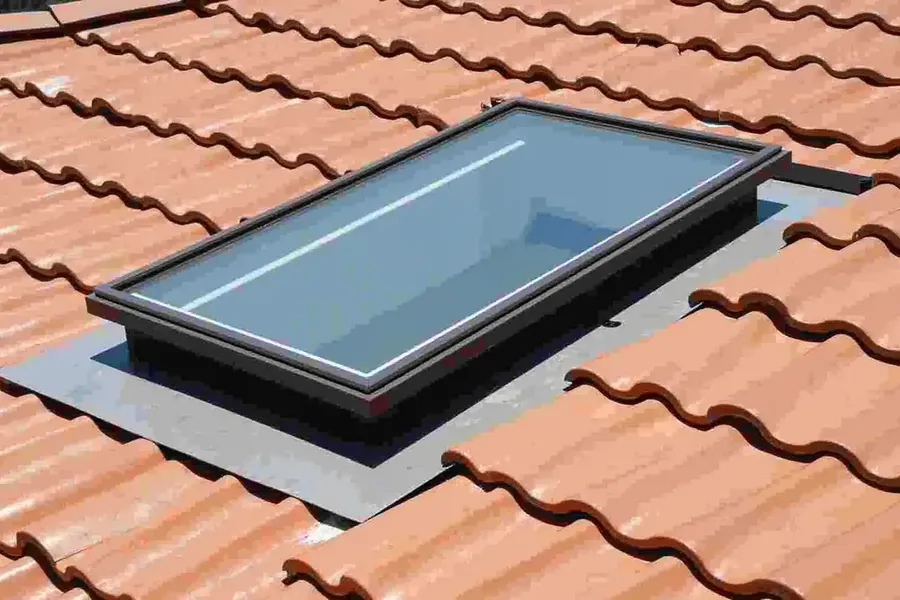
Metal Roof Installation in Riverside, CA
Metal roof installation in Riverside, CA: we install standing seam, exposed-fastener and metal shingle roofs on houses, under a City of Riverside permit.
You choose the system and the finish.
We answer emergency calls 24 hours a day, 7 days a week. If your old roof is leaking now, call (951) 433-4486 and we deal with the leak first.
Metal roofing contractor in Riverside, CA
We work inside the City of Riverside only, where roof permits come from City of Riverside Building and Safety. Roofing in California is licensed work: the Contractors State License Board (CSLB) C-39 Roofing classification names metal roofing systems among the materials a roofer works with. Check any roofer’s license on the CSLB’s Check a License page before you sign.
Who has the best metal roofing? Whoever fits the system your slope allows, to its maker’s instructions, with trim and flashing matched to the panel metal.
Why do some roofers turn down metal roofs? Standing seam panels are formed to the length of your slopes and seamed on the roof, and the trim is bent to fit each edge, so a crew set up only for shingles may not take the job. Metal is our job.
For loose screws, an open seam or failed flashing on a metal roof you already have, see metal roof repair on our roof repair page. Still choosing between metal, shingle and tile? Our page on roof replacement in Riverside compares them.
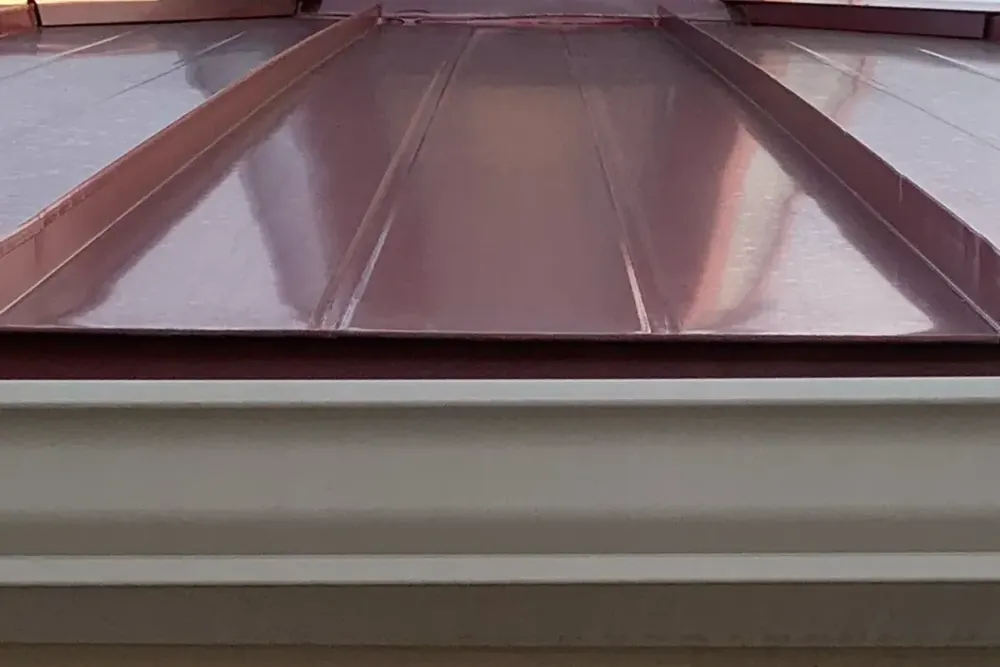
Metal roofing systems we install
Standing seam, exposed-fastener panels and metal shingles. Standing seam suits most houses with the slope for it, and the other two cost less or give a different look.
- Standing seam. The panel edges rise into seams that lock over clips fastened to the deck. The clips let each panel slide as it heats and cools, and no fastener goes through the panel face.
- Exposed-fastener (screw-down) panels. Ribbed or corrugated panels screwed through the face, each screw sealed by a rubber washer. They go on faster and cost less, and sun ages the washers.
- Metal shingles. Pressed-metal pieces shaped like shingle, shake or tile, some stone-coated, interlocked course by course. They need a steeper roof than standing seam.
Is standing seam more expensive than exposed-fastener? Yes. The panels are formed to length, the clips and seaming take longer, and the trim is more detailed. The extra buys a roof face with no screws through it.
Which metal roofs and brands are the top choices? We answer by system, not brand. Your quote names the maker and product line, so you can look it up before you sign. If shingle suits your house better, see shingle roof replacement in Riverside.

Steel or aluminum metal roofing, gauge and finish
Coated steel suits most houses; aluminum does not rust, weighs less and dents more easily, and we install both.
The 2025 California Residential Code (CRC), Chapter 9, lists the metals a roof panel may be made of and the coating each needs, among them galvanized steel, aluminum-zinc alloy coated steel and aluminum (Table R905.10.3).
The gauge. The lower the gauge number, the thicker the steel; the questions below compare 26 and 29.
The paint finish. Factory finishes come in grades, such as PVDF (polyvinylidene fluoride) and SMP (silicone-modified polyester), and the grade decides how the color holds up in sun.
The fasteners. Section R905.10.4 says: “Galvanized fasteners shall be used for steel roofs.” It adds: “Stainless steel fasteners are acceptable for metal roofs.” Two different metals in contact, or one shedding water onto the other, corrode where they meet (galvanic corrosion), so we match every screw, clip and flashing to the panel metal and keep copper and bare lead off a steel or aluminum roof.
Metal roof over shingles or a tear-off
Metal can go over one dry, sound layer of shingles; a wet or worn-out roof, or one with two layers, comes off first.
The 2025 California Residential Code, section R908.4 on roof recover, rules out a new roof over an old one where “The existing roof or roof covering is water soaked or has deteriorated to the point that the existing roof or roof covering is not adequate as a base”, or where “The existing roof has two or more applications of any type of roof covering.” It rules out a recover over slate, clay, cement or asbestos-cement tile as well. The same section lets a complete and separate system, such as standing seam carrying its loads to the house’s structure, go on without removing the old covering; we confirm the layer count and the permit with the City before we quote.
Going over saves the tear-off labor and disposal. A tear-off lets us see the deck, replace rotted boards and lay underlayment straight onto sound wood.
Metal roof installation steps
Measure, quote, permit, strip, deck, then underlayment, metal, flashing and ridge, and the City’s final inspection.
- Measure. Every slope and its pitch, the layer count, and the deck from the attic. The pitch decides which systems your roof can take.
- Your written quote, then the re-roof permit and its inspections.
- Tear-off or prep. We strip to the deck, or prepare one sound layer.
- Deck repair. Rotted sheathing out, loose boards refastened.
- Underlayment over the whole roof before any metal, which keeps your house dry from this point.
- Eave trim and valleys first, so every panel laps over them.
- The metal. Starting at the eave, the first panel set square to it, each panel clipped or fastened, seams locked as we go; metal shingles course by course.
- Flashing at every wall, chimney and skylight, with pipe boots made for metal.
- Ridge cap, with closures that keep wind-driven rain and pests out of the panel ribs.
- Clean-up and final inspection. Old roofing hauled away and a magnet sweep of your yard; the City’s inspector makes the final permit inspection, and we walk the roof with you and send you photos.
Metal roof code rules: slope, deck and underlayment
Standing seam goes down to 1/4 in 12; lapped panels need 3 in 12, or 1/2 in 12 with sealant in the laps. Metal shingles need 3 in 12, and every metal roof needs underlayment over a code-listed deck.
Minimum slope (2025 CRC, Chapter 9, sections R905.10.2 and R905.4.2):
- Standing seam panels can go on a roof as low as 1/4 unit vertical in 12 units horizontal, a 2 percent slope.
- Lapped panels with no sealant in the laps need at least 3 in 12, a 25 percent slope; with an approved sealant in the laps, 1/2 in 12, a 4 percent slope.
- Metal shingles “shall not be installed on roof slopes below 3 units vertical in 12 units horizontal (25-percent slope).”
A section flatter than the metal allows, such as a near-flat patio cover, takes a membrane instead: see flat roof repair and replacement in Riverside.
The deck. Metal roof panels fasten to wood structural panels, solid lumber sheathing or spaced lumber sheathing, except where they are designed for spaced supports (R905.10.1). Metal shingles go on wood structural panels, solid sheathing or closely fitted lumber sheathing, unless the product is designed for spaced lumber sheathing (R905.4.1).
The underlayment. Section R905.1.1 of the 2025 CRC says underlayment “is required for … metal roof shingles … metal roof panels”. The code sets which types qualify, so ask for the type by name. We install every metal roof to its maker’s instructions.
Class A fire rating on a metal roof
Yes, metal can carry Class A, the top fire rating for a roof covering. On a wood deck we fit a metal assembly listed as Class A.
The exception in section R902.1 of the 2025 CRC reads: “Class A roof assemblies include ferrous or copper shingles or sheets, metal sheets and shingles, clay or concrete roof tile, or slate installed on noncombustible roof decks or ferrous, copper or metal sheets installed without a roof deck on noncombustible framing.” A plywood or board deck is not noncombustible, hence the listed assembly.
Where Class A is required. In a High or Very High fire hazard severity zone, California’s 2025 Wildland-Urban Interface Code asks for a roof assembly that “complies with a Class A fire classification when tested in accordance with ASTM E108 or UL 790”, in section 504.2, as the City of Los Angeles Department of Building and Safety fire hazard zone checklist quotes it. We check your parcel against the City’s fire hazard map before we quote. When an older house has to comply is set out under Class A rules for a Riverside re-roof.
Does your insurance go down with a metal roof? Sometimes, through the fire rating rather than the metal. The California Department of Insurance’s Safer from Wildfires FAQ says insurers “are required to calculate new rates incorporating Safer from Wildfires discounts”, lists a “Class A fire-rated roof” under “Do more, save more”, and adds: “Different insurance companies may offer different discounts.” We give you the Class A listing of your roof assembly and the finaled permit to show your insurer.
Cool-rated metal roofing in Riverside
A cool-rated metal finish meets Riverside’s cool roof values for a pitched re-roof; a dark or unrated finish may not.
Riverside is California building climate zone 10 (CZ10), per the California Energy Commission’s Building Climate Zones. For a steep-slope re-roof on a single-family house in CZ10, the covering needs an aged solar reflectance of at least 0.20 and a thermal emittance of at least 0.75, or a solar reflectance index (SRI) of at least 16, per the Cool Roof Rating Council (CRRC) summary of the 2025 Energy Code. Solar reflectance is how much sunlight the roof bounces back; thermal emittance is how readily it sheds the heat it does take in.
The best color for your metal roof is one whose finish carries those ratings. Lighter colors bounce back more sun, but the code checks the rating, not the shade.
A rebate on a cool metal roof. Riverside Public Utilities offers a rebate of $0.10 per sq ft on a CRRC-rated cool roof product, subject to funds, applied for within 90 days of purchase. The details are on the Riverside Public Utilities weatherization rebates page, and the product’s rating is in the CRRC Rated Products Directory.
How much does a metal roof cost in Riverside?
A metal roof costs more up front than shingles; exposed-fastener panels on a simple roof cost least, standing seam on a steep, cut-up roof most. We measure every slope and put your price in a written estimate before any work starts.
Six things go into that price:
- Roof size. Roofers measure in squares, and a square is 100 sq ft of roof, the unit the USDA Forest Service’s roofing guide uses.
- Pitch and complexity. A steep roof needs roof jacks and harnesses and goes slower. Hips, valleys, dormers and skylights add cut panels, trim and flashing.
- Material and grade. The system, steel or aluminum, the gauge, and the finish grade.
- Tear-off and layers. Every layer that comes off adds labor and disposal.
- Deck and sheathing repair. Rotted decking found at tear-off runs $110 to $170 a sheet to replace. Nobody can count the rotted sheets from the ground; they show once the old roof is off.
- Flashing and valleys. Every wall, chimney, skylight and valley needs its own metal flashing.
Is it cheaper to put a metal roof or shingles? Shingles, on the price you pay up front; the permit fees and the side-by-side of metal, shingle and tile are on our Riverside re-roofing page.
Metal roof drawbacks and how we build around them
Rain noise, dents, oil-canning, heat movement, condensation and, on screw-down panels, screw upkeep: each comes down to how the roof is built.
- Rain noise is damped by a solid deck and underlayment, which is how we install.
- Dents come from a falling branch or a careless foot; heavier-gauge steel resists them better than thin panels or aluminum.
- Oil-canning, a slight waviness in the flat of a standing seam panel, is kept down by striated panels with fine stiffening ribs and clips set to let each panel move.
- Heat movement. Metal grows in the sun and shrinks at night. Clips under standing seam let it slide; on screw-down panels it works on the screws.
- Screw upkeep. Sun ages the rubber washers on exposed-fastener panels, and we replace them when they go.
- Condensation. Warm, damp air meeting cold metal leaves water underneath; the underlayment and a ventilated attic deal with it.
What sets a metal roof’s lifespan? The coating, the fastenings and the flashing, more than the metal. The zinc or aluminum-zinc coating keeps rust off steel, concealed clips spare standing seam the washer wear, and matched flashing lapped the right way keeps water off every joint.
Metal roof installation problems we prevent
Most failed metal roofs trace back to the clips, the flashing, the screws or the wrong system for the slope, and each is avoidable.
- Panels pinned tight. Standing seam goes on clips that let it move, so heat does not tear at the fastenings.
- Short flashing. Every wall, chimney, skylight and valley gets flashing sized for metal, lapped so water runs over it, not behind it.
- The wrong system for the slope. We measure the pitch first and quote only systems the code allows on it.
- Screws overdriven or misplaced. A crushed washer or a screw that misses the deck lets water in. We seat each washer where the panel maker says, and touch up scratches and cut edges so bare steel never sits open to the weather.
Want a second look at a metal roof someone else installed? We inspect it, photograph what we find and tell you what it needs: see roof inspection in Riverside.
Metal roof installation timeline in Riverside
A metal roof takes one to two weeks, depending on the work, and your written quote gives the start and finish dates.
Size, pitch, tear-off and deck repair move the dates. Standing seam panels are formed to your slopes after we measure, so the order comes before the install date, and the City sets its own inspection dates.
When should you schedule a metal roof? Plan around the rain; the season is covered under the best time to re-roof in Riverside. A leak does not wait: call for emergency roof repair in Riverside.
What should a metal roof installation quote include?
The system, metal, gauge, finish, underlayment, flashing, tear-off or overlay, and the permit; if one is missing, ask before you sign.
- The system and product line by name, the metal, its coating and gauge.
- The finish. Paint grade, color, cool rating, and the maker’s finish warranty if the product carries one.
- The underlayment by name, and new flashing, clips and fasteners matched to the panel metal.
- Tear-off or over. How many layers come off, and what happens to any rotted deck.
- The Class A assembly, where your address needs one, and the permit with its inspections.
- The down payment. In California, the down payment on a home improvement contract can’t be more than $1,000 or 10 percent of the contract price, whichever is less, as the CSLB’s What Is a Contract page sets out.
- The warranty. Warranty terms depend on the work, and we write them into your quote.
Is your metal roof estimate fair? Compare it line by line with another on the same scope; estimates for different panels or scopes are not comparable, whatever the totals say. A friend’s or neighbor’s price tells you something only if the roof size, system and scope match yours. Choosing between roofers in general is covered on our Riverside roofing overview.
Metal roof installation questions
What type of metal roofing is best?
Standing seam steel with a cool-rated finish, for most Riverside houses that have the slope for it. Exposed-fastener costs less, and metal shingles keep a shingle or tile look.
What is the downside to a metal roof?
Rain noise and dents are the ones you notice most, and the deck and the gauge answer both.
Is it okay to leave shingles under a metal roof?
Yes, when it is one dry, sound layer and the code allows a recover on your roof. Your quote says which way we go and why.
What are the downsides of installing a metal roof over shingles?
You keep a deck nobody has seen, and the old shingles add weight and can show bumps through flat panels.
What is the best thing to put under a metal roof?
A code-approved underlayment over a sound deck. Where the attic runs hot, good ventilation matters as much.
Do you need an air gap under a metal roof?
Not usually: a metal roof on a house goes straight over underlayment on a solid deck. Where the maker’s instructions call for battens or a vented gap, as some metal shingle systems do, we build it that way.
Which is better, 26 or 29 gauge metal roofing?
26 gauge, because it is the thicker and stiffer of the two. 29 gauge costs less and dents more readily under a branch or a boot. We walk any metal roof on the flats over the deck, and a thicker panel takes foot traffic better. The best thickness is the gauge the maker lists for your panel profile.
Are metal roofs noisy during rain?
Not on a house with a solid deck, underlayment and an attic below. You hear rain on metal over an open patio cover or a barn with no deck.
Why don’t more houses use metal roofs?
The price up front and the look. Metal shingles answer the look, and a cool-rated finish and a Class A assembly count in metal’s favor here.
Where do most metal roofs leak?
At the flashing and the fasteners: walls, chimneys, skylights, pipe boots, valleys and, on screw-down panels, the screws. A leak on a metal roof you already have is a repair job: see roof repair in Riverside.
Call for a metal roof installation quote
Call (951) 433-4486 and tell us about your roof and the metal you have in mind. Our roofing team answers. We come out, measure every slope, check the deck from the attic and give you a written estimate before any work starts, and you decide whether to go ahead.